Frank Wild, 1873-1939
Biographical notes
Able seaman Discovery
1901-04
In charge of provisions
Nimrod 1907-09
Sledge-master Aurora 1911-14
2nd in command
Endurance 1914-17
2nd in command
Quest-
Ernest Shackleton 1921-22
Once wedded to Nature there is no divorce - separate
her you may and hide yourself amongst the flesh-pots of London,
but the wild will keep calling and calling forever in your ears.
You cannot escape the "little voices".
- Frank Wild
 Frank
Wild, studio portrait for the Australasian Antarctic Expedition
with Mawson
Frank
Wild, studio portrait for the Australasian Antarctic Expedition
with Mawson
Expeditions
John Robert Francis Wild, better known as Frank Wild is the relatively unknown giant of the "Heroic Age" of Antarctic Exploration. He played a significant role in several of the most important expeditions, being on board when the Discovery sailed for McMurdo Sound in 1901 so heralding the start of 20 years of epic exploration and adventure, he was on board the Quest in 1922 when the death of Shackleton at South Georgia signified the end of the era. No one else was so involved and no other explorer spent so long in Antarctica, he is the only man to have been awarded four Polar Medals, for each of his first four expeditions.
He is frequently referred to as Shackleton's "right hand man" or the "loyal lieutenant" though he was much more than this.
In 1901, he volunteered to join Scott's "British national Antarctic Expedition" 1901-04 on board the Discovery, being involved in the sledging programme.

Frank Wild

On the Aurora with the Mawson expedition

Ernest Shackleton, left and Frank Wild, right camping on the sea ice after the sinking of the Endurance

Frank Wild on the Aurora with the Mawson expedition

Frank Wild in his bunk at The Grottoes, Aurora expedition

Watson, Wild and Dovers at the Grottoes, Aurora expedition

Wild and Kennedy setting out to relieve Jones' Party

Wild and Watson
His start as an Antarctic hero was less than auspicious, Douglas Mawson describes the first time he met Wild in New Zealand on the Nimrod expedition as being when Wild was being carried out of a hotel while drunk.
On the Nimrod expedition 1907-09 led by Shackleton, he was chosen as one of the men who would manhaul up the Beardmore glacier to the South Pole, coming within 97 miles of the goal. Discretion became the better part of valour on this occasion and the party turned back at a point where they thought they could return still alive, rather than pressing on to the pole, when they were unlikely to make it back safely to McMurdo Sound and their base.
In 1911, he joined Douglas Mawson's two year long "Australian Antarctic Expedition" as a sledging expert and was in command of the Western Base experiencing very difficult snow and sledging conditions.
-
Single, Leader of the Western Base Party (Queen Mary Land).
He joined the Merchant Service in 1889 and the Navy in 1900,
served on an extended sledge journey during the National
Antarctic Expedition (Capt. R. F. Scott) of 1901-1904, and
was one of the Southern Party of Sir Ernest Shackleton's
Expedition from 1907-1909. During the Australasian Expedition
he opened up a new tract of country - Queen Mary Land.
From Appendix 1, Mawson - Heart of the Antarctic
Shackleton selected him again for the 1914-17 "Imperial Trans-Antarctic Expedition" when he was second in command to Shackleton himself. His sure handling and steady support proved invaluable when the expedition ship, the Endurance sank in mid-ocean and the party had to make it across initially solid, but increasingly broken-up sea-ice to Elephant Island. Wild remained on Elephant Island for nearly 4 months with the majority of the crew appointed leader by Shackleton who set off with a small party to fetch help.
He returned to England in early 1917 and volunteered for service in World War 1 where he was posted to Archangel in far north Arctic Russia.

Frank Wild, night shift in the "Grottoes" on the Mawson expedition

With the wreck of the Endurance after she was crushed by ice and before the remains slipped beneath the sea and ice.

Frank Wild, left on the Nimrod after the farthest south at the time of 97 miles from the South Pole.
After the war, he went to South Africa where he farmed
with Francis Bickerton
(ex. Mawson expedition) and
Dr. James McIlroy (ex-Endurance) They farmed in British
Nyasaland in the neighbourhood of Lake Nyasa (South Africa)
between the end of the First World War and Wild and McIlroy
leaving to join the "Quest" expedition in 1921.
They cleared the then virgin forest and planted cotton.
They loved the life though suffering intermittently from
bouts of malaria. According to Frank Wild, in a letter written
in 1920 to his cousin Margaret, they "would have been
there still if Shackleton had not called for us to come
on this expedition". They had the full intention to
return to their farm in Africa after the expedition; whether
they did or not, I do not know.
Rhona Schmitz
great niece of Dr. James McIlroy.
Letter
sent by Frank Wild from South Africa to his Cousin Margaret,
4th August 1920
Shackleton once again requested him to take part in the 1921-1922 Shackleton-Rowett expedition on the Quest which was cut short due to Shackleton's death from a heart attack on South Georgia before the expedition had reached Antarctica proper. Wild took over as leader and brought the adventure to a conclusion after a brief trip from South Georgia to Antarctica.
Biography
Frank Wild was born in Skelton, Yorkshire, the eldest of 8 sons in a family that also had 3 daughters, his father was a school teacher. At the age of 16 in 1889, he joined the merchant navy, transferring to the Royal Navy in 1900.
He was the recipient of a number of awards for his contributions to exploration and in advancing geography, in 1923, he was made a Freeman of the City of London. In June 1923 he returned to South Africa, to continue to farm though was unsuccessful due to a prolonged drought. His savings gone, he took work in a bar and in a mine to support himself and his wife, over the next few years he tried his hand at various ventures falling into financial difficulties. He was a popular character where he worked and was by no means unique in experiencing difficulties at this time which was the depression years of the late 20's and early 30's. He seems to have had some difficulties with alcohol, the severity of which is unclear and depends on the source of the information, at any rate, there is always some mention of his being a drinker.
Frank Wild died of pneumonia and diabetes on the 19th of August 1939 in Klerksdorp, South Africa where he was employed as a store man at the Bobrasco Mine. He was cremated on the 23rd of August 1939 in the Braamfontein Cemetery in Johannesburg*
Wild's ashes were found still in the church in Braamfontein Cemetery in 2011 where they had lain for 72 years. His widow had intended them to be taken to South Georgia to be laid alongside Shackleton's grave, though war broke out a week after her husbands death and then with her passing and no there being children, the ashes were forgotten. Later in 2011 his ashes were taken to South Georgia and laid alongside "The Boss", Ernest Shackleton in a ceremony witnessed by descendants of both Wild and Shackleton.
*Frank Wild is widely reported as dying in Johannesburg, SA. I am indebted to Angie Butler (author of biography "The Quest for Frank Wild") and Luigi Casaleggio for correcting this error after much research.
Captain James Cook - It is sometimes reported that Frank Wild was a direct descendent of Captain James Cook through his mother Mary Cook. While Frank probably believed this to be true and repeated it through his life it is sadly not true as none of James Cook's children had children themselves so there are no direct descendents.
References to Frank Wild by Orde-Lees in "Elephant Island and Beyond" buy USA buy UK
-
The training of dogs has commenced - soon their services will relieve us of a great deal of not unpleasant work in bringing in distant seals. Wild, Marston, Crean, Macklin, McIlroy and Hurley are the dog men: none of them has any preliminary experience to speak of, but this does not seem at all essential.
-
We were lucky enough to get five crab-eaters and a monster leopard seal over 12 ft. long which Wild shot as he was chasing me round a small thin floe. They are really dangerous animals and this was the first I had ever seen, and it gave me a good fright.
-
When the end was in sight, we all realised the debt of gratitude we owed to our splendid, capable leader, Wild, who by his buoyant optimism, dogged determination, unrivalled experience and calm demeanour, had pulled us through these trying months of waiting.
Every man is prone to make errors of judgment at times, and even the best of leaders can never hope to be entirely exempt from this, but if ever a man worked hard and conscientiously to keep up the spirits and maintain the general peace and welfare of a community containing one or two "difficile" members, that man was Frank Wild.
References to Frank Wild in Shackleton's book "South!" buy USA buy UK
-
Two more emperors were captured on the following day, and, while Wordie was leading one of them towards the ship, Wild came along with his team. The dogs, uncontrollable in a moment, made a frantic rush for the bird, and were almost upon him when their harness caught upon an ice-pylon, which they had tried to pass on both sides at once. The result was a seething tangle of dogs, traces, and men, and an overturned sled, while the penguin, three yards away, nonchalantly and indifferently surveyed the disturbance. He had never seen anything of the kind before and had no idea at all that the strange disorder might concern him.
-
Five teams went out in the dim noon twilight, with a zero temperature and an aurora flickering faintly to the southward. The starting signal was to be given by the flashing of a light on the meteorological station. I was appointed starter, Worsley was judge, and James was timekeeper. The bos'n, with a straw hat added to his usual Antarctic attire, stood on a box near the winning-post, and was assisted by a couple of shady characters to shout the odds, which were displayed on a board hung around his neck 6 to 4 on Wild, "evens" on Crean, 2 to 1 against Hurley, 6 to 1 against Macklin, and 8 to 1 against McIlroy. Canvas handkerchiefs fluttered from an improvised grand stand, and the pups, which had never seen such strange happenings before, sat round and howled with excitement. The spectators could not see far in the dim light, but they heard the shouts of the drivers as the teams approached and greeted the victory of the favourite with a roar of cheering that must have sounded strange indeed to any seals or penguins that happened to be in our neighbourhood. Wild's time was 2 min. 16 sec., or at the rate of 10 miles per hour for the course.
-
Another race took place a few days after the "Derby." The two crack teams, driven by Hurley and Wild, met in a race from Khyber Pass. Wild pulling 910 lbs. or 130 lbs. per dog, covered the 700 yds. in 2 min. 9 sec., or at the rate of 11.1 miles per hour. Hurley's team, with the same load, did the run in 2 min. 16 sec. The race was awarded by the judge to Hurley owing to Wild failing to "weigh in" correctly. I (Shackleton) happened to be a part of the load on his sledge, and a skid over some new drift within fifty yards of the winning post resulted in my being left on the snow. It should be said in justice to the dogs that this accident, while justifying the disqualification, could not have made any material difference in the time.
-
The dog teams went off to the wreck early each morning under Wild, and the men made every effort to rescue as much as possible from the ship. This was an extremely difficult task as the whole of the deck forward was under a foot of water on the port side, and nearly three feet on the starboard side.
-
Then Wild went out with a dog team to shoot and bring in the game. To feed ourselves and the dogs, at least one seal a day was required. The seals were mostly crab-eaters, and emperor penguins were the general rule. On November 5, however, an adelie was caught, and this was the cause of much discussion, as the following extract shows: "The man on watch from 3 a.m. to 4 a.m. caught an Adelie penguin. This is the first of its kind that we have seen since January last, and it may mean a lot. It may signify that there is land somewhere near us, or else that great leads are opening up, but it is impossible to form more than a mere conjecture at present."
-
On December 20, after discussing the question with Wild, I informed all hands that I intended to try and make a march to the west to reduce the distance between us and Paulet Island. A buzz of pleasurable anticipation went round the camp, and every one was anxious to get on the move. So the next day I set off with Wild, Crean, and Hurley, with dog teams, to the westward to survey the route. After travelling about seven miles we mounted a small berg, and there as far as we could see stretched a series of immense flat floes from half a mile to a mile across, separated from each other by pressure-ridges which seemed easily negotiable with pick and shovel.
-
So that afternoon Wild and I ski-ed out to the crack and found that it had closed up again. We marked out the track with small flags as we returned. Each day, after all hands had turned in, Wild and I would go ahead for two miles or so to reconnoitre the next day's route, marking it with pieces of wood, tins, and small flags. We had to pick the road which though it might be somewhat devious, was flattest and had least hummocks.
-
Two seals were killed to-day. Wild and McIlroy, who went out to secure them, had rather an exciting time on some very loose, rotten ice, three killer-whales in a lead a few yards away poking up their ugly heads as if in anticipation of a feast.
-
Worsley and Wild realized that the attempt must be made, and they both asked to be allowed to accompany me on the voyage. I told Wild at once that he would have to stay behind. I relied upon him to hold the party together while I was away and to make the best of his way to Deception Island with the men in the spring in the event of our failure to bring help. Worsley I would take with me, for I had a very high opinion of his accuracy and quickness as a navigator, and especially in the snapping and working out of positions in difficult circumstances an opinion that was only enhanced during the actual journey. Four other men would be required, and I decided to call for volunteers, although, as a matter of fact, I pretty well knew which of the people I would select. Crean I proposed to leave on the island as a right-hand man for Wild, but he begged so hard to be allowed to come in the boat that, after consultation with Wild, I promised to take him.
-
I saw a little figure on a surf-beaten rock and recognized Wild. As I came nearer I called out, "Are you all well?" and he answered, "We are all well, boss," and then I heard three cheers. As I drew close to the rock I flung packets of cigarettes ashore; they fell on them like hungry tigers, for well I knew that for months tobacco was dreamed of and talked of. Some of the hands were in a rather bad way, but Wild had held the party together and kept hope alive in their hearts. There was no time then to exchange news or congratulations. I did not even go up the beach to see the camp, which Wild assured me had been much improved.
-
The Yelcho had arrived at the right moment. Two days earlier she could not have reached the island, and a few hours later the pack may have been impenetrable again. Wild had reckoned that help would come in August, and every morning he had packed his kit, in cheerful anticipation that proved infectious, as I have no doubt it was meant to be. One of the party to whom I had said "Well, you all were packed up ready," replied, "You see, boss, Wild never gave up hope, and whenever the sea was at all clear of ice he rolled up his sleeping-bag and said to all hands, "Roll up your sleeping-bags, boys; the boss may come to-day.' "
Landmarks named after Frank Wild
Feature Name:
Point Wild
Feature Type: summit
Latitude: 61°06'S
Longitude:
054°52'W
Description:
A point 6 mi W of Cape Valentine on the N coast of
Elephant Island, South Shetland Islands. Named Cape Wild by
the Shackleton Endurance expedition 1914-16, but Point
Wild is recommended for this feature because of its small size
and to avoid confusion with Cape Wild on George V Coast.
Variant Name(s) - Cape Wild
Feature Name:
Mount Wild
Feature Type: summit
Latitude: 84°48'S
Longitude:
162°40'E
Description:
A peak 2.5 mi W of Mount Augusta at the SW extremity
of the Queen Alexandra Range. Discovered by the BrAE (1907-09).
Variant Name(s) - Wild Mountains
Feature Name:
Wild Icefalls
Feature Type: glacier
Latitude:
84°55'S
Longitude: 162°25'E
Description:
The extensive icefalls
at the head of Beardmore Glacier, between Mount Wild and Mount
Buckley. Named by the NZGSAE (1961-62) in association with nearby
Mount Wild.
Feature Name:
Mount Wild
Feature Type: summit
Elevation: 945
Latitude:
64°12'S
Longitude: 058°53'W
Description: Sharply defined rock
ridge with several summits, the highest 945 m, standing at the
N side of the mouth of a glacier on the E coast of Trinity Peninsula.
First charted by the FIDS in 1945.
Feature Name:
Cape Wild
Feature Type: cape
Latitude: 68°23'S
Longitude:
149°07'E
Description:
A prominent rock cape on the eastern end of the Organ
Pipe Cliffs. This may be the cape viewed from the ship superior
mirage, by the USEE under Lt. Charles Wilkes, Jan. 19, 1840.
Wilkes applied the name "Point Emmons" for Lt. George
F. Emmons of the Vincennes. The cape was accurately positioned
by the AAE (1911-14) under Douglas Mawson.
Other Crew of the Endurance Expedition
Bakewell,
William - Able Seaman
Blackborow,
Percy - Stowaway (later steward)
Cheetham,
Alfred - Third Officer
Clark, Robert S.
- Biologist
Crean, Thomas
- Second Officer
Green, Charles J.
- Cook
Greenstreet,
Lionel - First Officer
Holness, Ernest
- Fireman/stoker
How, Walter E.
- Able Seaman
Hudson, Hubert T.
- Navigator
Hurley, James Francis
(Frank) - Official Photographer
Hussey,
Leonard D. A. - Meteorologist
James,
Reginald W. - Physicist
Kerr, Alexander.
J. - Second Engineer
Macklin,
Dr. Alexander H. - Surgeon
Marston,
George E. - Official Artist
McCarthy, Timothy
- Able Seaman
McIlroy, Dr. James
A. - Surgeon
McLeod, Thomas
- Able Seaman
McNish, Henry
- Carpenter
Orde-Lees, Thomas
- Motor Expert and Storekeeper
Rickinson, Lewis
- First Engineer
Shackleton,
Ernest H. - Expedition Leader
Stephenson,
William - Fireman/stoker
Vincent, John
- Able Seaman
Wild, Frank
- Second in Command
Wordie, James M.
- Geologist
Worsley, Frank
- Captain
Acknowledgements - thank you to the following for their contributions to this page:
- Gregory Reese, Portland, Oregon.
Biographical information
- I am concentrating on the Polar experiences of the men involved.
Any further information or pictures visitors may have will be gratefully received.
Please email
- Paul Ward, webmaster.
What are the chances that my ancestor was an unsung part of the Heroic Age
of Antarctic Exploration?
Ernest Shackleton Books and Video
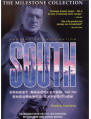
South - Ernest Shackleton and the Endurance Expedition (1919)
original footage - Video
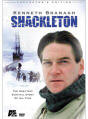
Shackleton
dramatization
Kenneth Branagh (2002) - Video
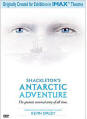
Shackleton's Antarctic Adventure (2001)
IMAX dramatization - Video
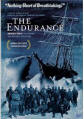
The Endurance - Shackleton's Legendary Expedition (2000)
PBS NOVA, dramatization with original footage - Video
Endurance : Shackleton's Incredible Voyage
Alfred Lansing (Preface) - Book
South with Endurance: Frank Hurley - official photographer
Book
South! Ernest Shackleton Shackleton's own words
Book
Shackleton's Way: Leadership Lessons from the Great Antarctic Explorer
Book