
 |
-
What is the age range
on Antarctic Trips?
The age range of passengers on Antarctic
trips tends towards 40+, there are often 30
something's in lesser numbers and maybe
some younger passengers, most will probably
be in the 45-65 age range.
There is no "shoestring"
way of getting there so you will rarely get any
young independent travellers. Passengers on
Antarctic trips are frequently very well travelled
and tend to be interesting people, the sort
who are prepared to spend money on an "experience"
as opposed to going on an eating and entertainment
type cruise. Antarctic trips are reasonably
active so passengers need to be able to get
around readily.
-
What sort of entertainment
is provided?
Antarctic
small ship cruises are not what people usually
imagine a cruise to be, for the majority of
passengers, this is a positive thing!
While you have guides and experts on board,
their expertise does not necessarily lie in
performing a medley from a musical complete
with fish-nets and high heels after dinner (you
could always ask). There are usually no professional
entertainers on these ships, there will be talks
and maybe videos shown but they will be very
much to do with Antarctica and the specialisms
of the guides.
Relaxing, reading, watching
the world go by, getting to know your fellow
passengers over coffee or a drink at the bar
are what will pass the time when on board and
sailing. Antarctic cruises differ from the wider
cruising experience quite significantly in this
regard.
-
How fit do I need
to be to take part in the activities?
Most cruises will have a
variety of activity levels for the passengers.
You need to be in generally good health, while
there will probably be a doctor on board the
ship, you will be a long way from any other
medical assistance.
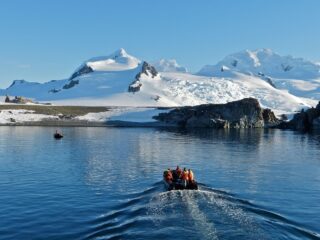
You should be sufficiently
able-bodied to get in and out of zodiacs from
the ship and ashore and negotiate uneven possibly
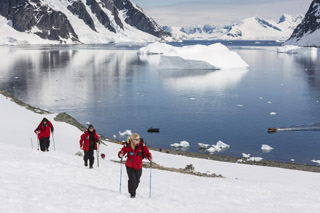
slippery ground. Once ashore there are usually
two or three different walks. Typically one
will be easy at low level over a short distance
with frequent stops, one will involve gaining
more altitude and cover much more ground with
fewer stops. Another will often be for
photographers and wildlife enthusiasts, which
may be quite energetic or might involve spending
a lot of time in one area as dictated by circumstances.
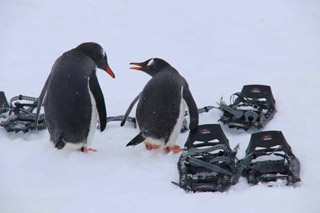
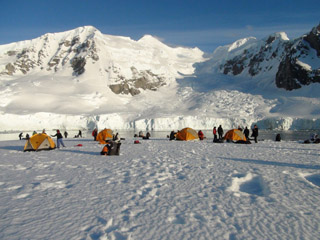
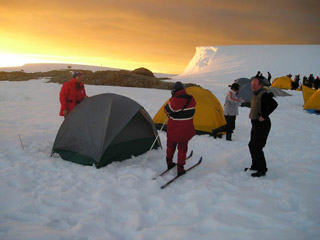
Some trips will offer one or more activities
of sea kayaking, cross country skiing, camping,
snowshoeing, mountaineering or diving as options
where obviously a higher level of fitness is
required and possibly some prior experience.
-
What medical facilities
are there?
Antarctic
cruises do not call at towns and cities along
the way with all of the medical facilities that
you would expect. Ships will carry a medic,
but facilities will vary according to the size
of the ship.
In an emergency, pretty
much all the ship could do would be to head
back to the nearest port which may well be a
day or two's sailing away. It may be
possible to visit a national base if there are
facilities and medical personnel available.
Anyone with any kind of significant disability
or medical need should contact a tour company
and explain the situation in as much detail
as possible so that the Antarctic trip can be
tailored to the individual need. There is no
reason that a disability that does not prevent
someone living a fairly normal reasonably active
life at home should prevent a trip to Antarctica,
obviously it is very much down to individual
details.
-
What is the food like?
Food will be plentiful,
tasty and nutritious, of course the more luxurious
your ship the greater the variety and quality.
Fresh fruit and veg may run low on longer (20
days +) trips, but overall you'd be hard
pushed to tell the difference from a good hotel
restaurant. Most dietary requirements
can be met. I have never heard anyone comment
negatively about the food on an Antarctic trip
but have heard lots along the lines of "Hadn't
really counted on that aspect, definitely a
bonus!".
-
Will there be a variety
of nationalities on the ship?
Antarctic cruise ships tend
to be very cosmopolitan environments. The language
on board is most commonly English and lectures,
guided walks etc. will be conducted in English.
There are also particular cruises where French,
German, Chinese etc. language and culture predominate.
While there may be a majority group of some
nationality on a trip, there will nearly always
be half a dozen and probably many more different
nationalities represented by the passengers.
-
Are these cruises
suitable for older passengers
Antarctica is a fairly active
place to visit, though you can have quite a
sedate time on a trip there if you choose. To
make the most of it, you should get ashore as
often as possible. To do this, you should be
able to walk down somewhat wobbly possibly steep
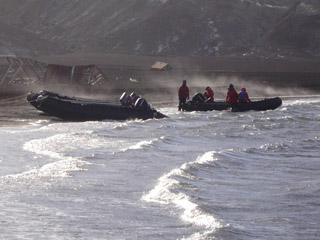
steps to get into the zodiac which may
sometimes be rising
and falling with the waves, up to a foot but usually less. At the other end, you
will need to be able to get out of the boat
over the side and probably into ankle deep water
or onto wet rocks. There will be many strong
hands to help you do this, but it does require
a certain level of sprightliness. Once ashore
you may need to negotiate uneven rocky ground
and/or ice and snow that may be slippery. While
there are many active people in their 80's
and even older who visit Antarctica and take
part in the whole programme, it is not for the
infirm or unsteady of any age.
-
Are there any guides
on trips to point things out and explain what
I see?
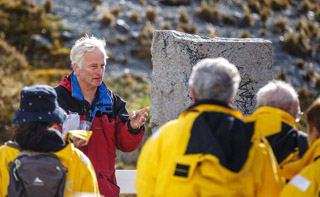
Biologists,
ornithologists, geologists, historians etc.
will be your guides to where you are and what
you will see in Antarctica. Don't be afraid
to ask questions, if you're asking there
will be others who would like to know the answer
too and the guides will be glad you're interested.
-
What is "Open
Bridge"
A
policy on the bridge (where the crew go to drive
and operate the ship) of most cruise ships to
Antarctica. You the passenger can wander on
and have a bit of a nose around as long as you
don't press things.
The first time
I went on the bridge of a ship in Antarctica,
there was quite a swell running, as I was walking
off, the ship lurched and I fell against a big
bank of switches and buttons setting off the
abandon ship signal - try not to do this!
-
Will there be an opportunity
to discuss photography?
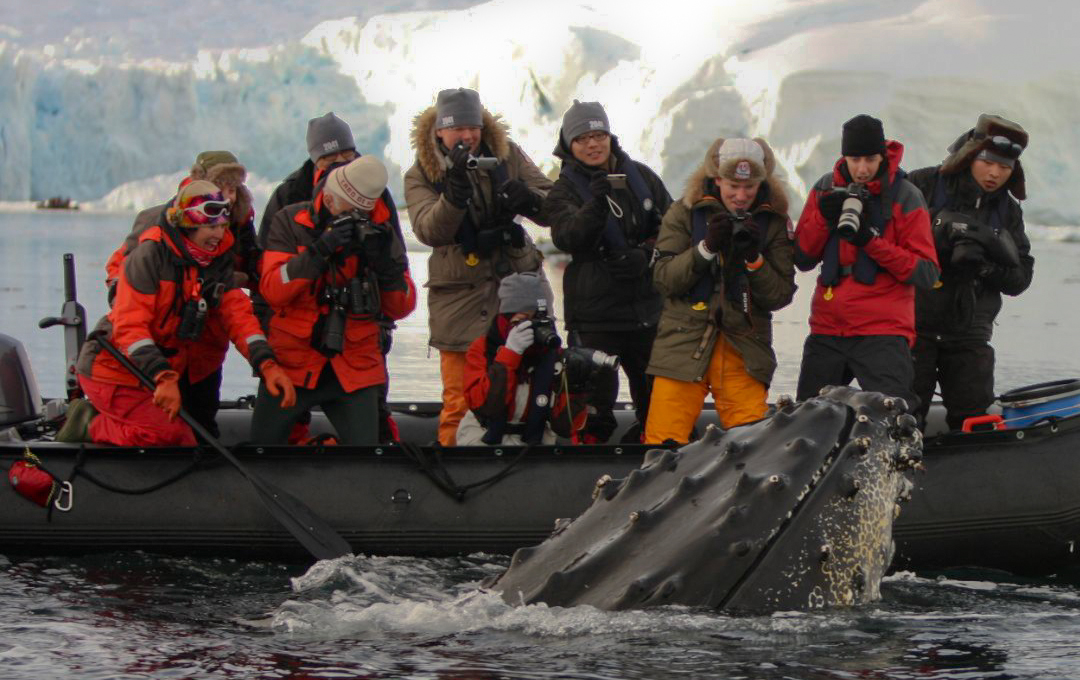
Many ships have a resident photographer
as a part of the programme at no additional
cost. There will also be many keen photographers
on your trip happy to offer help and advice.
Even if you are a novice it's worth getting
a decent camera for your trip and practice using
it before you go.
-
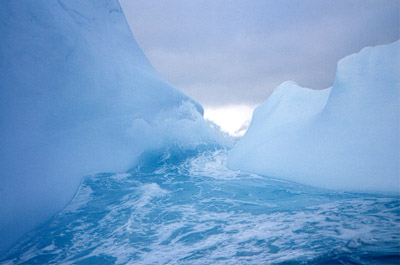
What is the likelihood
I will encounter rough weather at sea?
You should expect rough
conditions at some point, this may be when crossing
the Drake passage or elsewhere on your cruise,
though you may encounter calm seas all the way.
If you suffer at all from sea-sickness, take
some medication, patches are popular and quite
effective. Take care during rough seas as you
can be dumped into your chair or onto your
bed more enthusiastically that you expected
or find that getting up happens a bit more quickly!.
Slippery silk pajamas are not recommended as
every time the ship lurches, you'll shoot
off in that direction. Walk around with your
legs bent a little at the knee to absorb unexpected
lurches. It can also be great fun!
The
first time I encountered rough seas I stayed
in my bunk for about 48 hours feeling awful,
this is the worst thing you can do. Make the
effort to find your sea-legs, some food in your
stomach is better than none. Go up on deck or
look out of a window, the sickness comes largely
from the discrepancy between what your eyes
tell you and what your inner ear tells you.
If you are just looking at the interior of
the ship as it moves
with you, the balance organs in your inner ears
are saying the world is moving around, while
your eyes are saying it isn't. If you look
at a the horizon while the ship is moving, both
are saying the world is moving, it all makes
more sense and you feel better. After my inauspicious
start (40 years ago) I've never suffered
from sea-sickness since.
-
Will there be opportunities
to buy souvenirs?
It is possible to buy souvenirs on the
Antarctic Peninsula from the gift shop and Post
Office at Port Lockroy (most Peninsula trips
call here), and also from the gift shop at the
American Palmer base, though far fewer trips
call there. In the Ross Sea region, New Zealand
Scott base and American McMurdo base also have
gift shops. Otherwise shops are non-existent,
ships usually have a small one with scenic postcards
and branded caps, t-shirts etc. and maybe some
other items of clothing.
-
What is meant by "Unlocked
door policy"
This operates as standard on ships in
Antarctica. There will be a ships safe if you
wish to leave large amounts of cash. Like a
utopian global village, there is no crime aboard
a cruise ship in Antarctica. Most ships are
cashless, bills and tips being paid by card
on the last day or morning of departure.
-
What can I expect
from the weather?
The unexpected! There's a lot of
weather in Antarctica and it's in evidence
most days. It can and does change in a moment
so make sure you take your outer layers, gloves
and hat ashore with you even though the sun
is shining and it's warm when you set off.
-
Are cruises suitable
for children?
Some ships have rules where they won't take
passengers who are under 6 or under 12. While
children are not discouraged from an Antarctic
trip, they are not generally catered for either.
The chances are you won't meet any other
children on the cruise and there may be long
periods of entertaining yourself (sea passages)
which for the adults is all part of the attraction
of being able to switch off and absorb where
you are, read, chat etc. For children this may
be a more challenging time and also for parents
hearing "I'm bored" (and other
passengers too). Antarctica is only really a
family destination for older children.
|

 Antarctica
Trips
Antarctica
Trips