
Extreme Cold Weather Clothing
Antarctic Wear
2025-26
Warm clothing is essential in Antarctica or any cold environment when temperatures fall and winds pick up. Using the "layering method" is far more effective than relying on a single bulky garment. Each layer serves a specific purpose, trapping insulating air both between and within layers, while allowing flexibility to adjust to changing conditions.
 This is the US page
UK
 | Australia /
New Zealand
| Australia /
New Zealand
 | Cold
Weather Clothing for Kids'
| Cold
Weather Clothing for Kids'
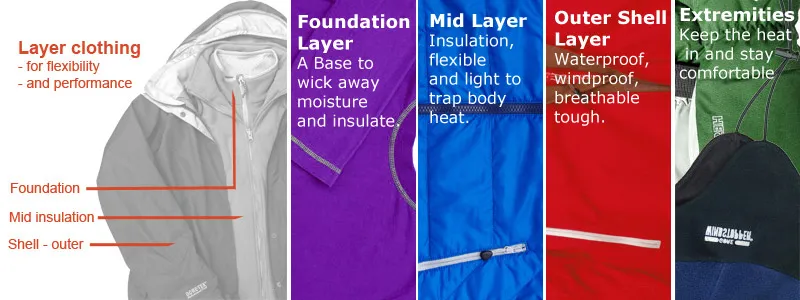
Foundation / Base Layer - A close fitting layer that insulates while drawing perspiration away from the skin to keep you comfortable.  The
base layer, worn directly against the skin, should be
soft, comfortable, and designed to wick away perspiration
quickly, keeping you dry even during intense activity.
Moisture trapped in clothing reduces insulation, so
it's essential to move sweat away from your skin and
through your outer garments. Breathability is crucial,
and for maximum efficiency the base layer should fit
closely to the body. The
base layer, worn directly against the skin, should be
soft, comfortable, and designed to wick away perspiration
quickly, keeping you dry even during intense activity.
Moisture trapped in clothing reduces insulation, so
it's essential to move sweat away from your skin and
through your outer garments. Breathability is crucial,
and for maximum efficiency the base layer should fit
closely to the body.In the coldest conditions, long underwear is a must. Modern base layers are typically made from fine wool or advanced synthetic fabrics, often treated to prevent the buildup of odor-causing bacteria from sweat.
Merino wool is
considered the gold standard of thermal underwear.
Though not the most budget-friendly option, it excels
in performance. This soft, fine natural fiber, sourced
from merino sheep, effectively wicks moisture away from
the skin and is naturally resistant to odor. Insulated base
layer tops - A versatile layer that
works as a cozy outer garment indoors and adds warmth
when worn outdoors. Insulated base
layer bottoms- Long johns - Designed
to be worn beneath thick trousers or over-pants, long
underwear for the legs is rarely necessary during the
Antarctic summer in coastal regions, unless you are particularly
sensitive to the cold. |

 Men's
- MERIWOOL - midweight merino baselayer half-zip
Men's
- MERIWOOL - midweight merino baselayer half-zip Women's - Merino.tech merino wool base layer
top - light, mid or heavyweight, lots of color choices
Women's - Merino.tech merino wool base layer
top - light, mid or heavyweight, lots of color choices Men's
- Thermajohn Ultra Soft Thermal Underwear Set,
synthetic, choice of colors
Men's
- Thermajohn Ultra Soft Thermal Underwear Set,
synthetic, choice of colors Women's
- Thermajane Ultra Soft Thermal Underwear Set,
synthetic, choice of colors
Women's
- Thermajane Ultra Soft Thermal Underwear Set,
synthetic, choice of colors|
The Outer or Shell Layer - Direct protection from the weather, this layer must be windproof and, depending on the temperature, may also need to be waterproof. It can function purely as a "shell" or include additional insulation for warmth.
 Jackets
for cold conditions should always include a hood. Jackets
for cold conditions should always include a hood.The outer layer is especially important and should have features such as draw-cords and adjustable cuffs to prevent warm air from escaping and to prevent snow finding its way into nooks and crannies (snow in the cranny is most uncomfortable). Waterproofing isn't essential in very cold weather, since rain doesn't fall at those temperatures. However, if you'll be spending time in boats, a waterproof layer is vital, you don't want to come ashore after bouncing over an excitable sea crossing only to be wet and cold for the rest of the day. Keep in mind that fully waterproof garments are generally less breathable and often become stiffer and less flexible in low temperatures, so choose according to your intended use. When insulation is built into the outer layer, it may be synthetic or natural down, the latter still being considered one of the most effective options.. |


|
Mid Insulation Layer/s - AKA your "normal" everyday clothes, this layer can be optimized for cold conditions through thoughtful fabric choices and design details. It serves as a versatile source of insulation that's easy to put on or take off. Features like buttons, zippers, and similar fastenings allow you to adjust ventilation, opening up during exertion, or closing down quickly when the weather turns.
Traditionally woolen sweaters and pants made from natural fibers, prized for their warmth, durability, and ability to retain heat even when damp were worn. Today, these garments are still commonly used but are often supplemented or replaced by modern materials such as polypropylene fleece, which is lightweight and quick-drying, or lightweight down, which provides exceptional insulation with minimal bulk. Combining traditional and modern fabrics allows for greater versatility, comfort, and performance in a range of cold-weather conditions. This layer should offer effective insulation while remaining breathable, allowing perspiration to pass through and escape to help regulate body temperature while remaining comfortable to wear. Insulating Layers for the Upper Body Alternatives include layers such as a wool-blend or breathable synthetic shirt, a wool or fleece sweater, or a down sweater or jacket. At least one of these layers should extend longer at the back to prevent skin exposure during physical activity. Insulation can also come from a windproof or waterproof outer layer, or it can be a separate garment. While fleece with modern coatings may seem sufficient, it generally isn't wind- or waterproof enough to serve as a standalone outer layer. Some may prefer a heavy, down-filled parka. These provide exceptional warmth and can be quickly thrown over a t-shirt for instant insulation. However, they can be bulky and limit flexibility when layering for movement or walking ashore. A more versatile, lightweight option often offers a better balance between warmth and mobility.  Lightweight
down, with or without hood Lightweight
down, with or without hoodMore lightweight down: men's | women's  Synthetic
insulated , windproof jacket Synthetic
insulated , windproof jacketmen's | women's Insulating Layers for the Lower Body Wear thick, warm pants made from natural materials like moleskin or from heavyweight synthetics such as polyester or nylon. Moleskin, a densely woven cotton named for its soft, textured finish (rather than either the skin or kin of actual moles) remains one of the most reliable choices for extreme cold, offering unmatched warmth, comfort, and practicality. Pants should be loose enough to allow good circulation and to trap some insulating air; tight-fitting or skinny styles reduce both warmth and comfort, so save those until the temperatures rise. Lined pants - Men's Women'sMoleskin pants - Men's Women's |


 Women's - Winter Softshell Pants
Wind chill - The most frequent reason people feel uncomfortable in cold conditions is a lack of consideration of the effects of the wind. A properly windproof outer layer can make a significant difference, enhancing the overall warmth of all your clothing.
At warmer temperatures, wind has a lesser cooling effect, but as temperatures drop, its impact increases. The table illustrates how different wind speeds affect the apparent temperature, with the numbers in the blue section showing the reduction in perceived temperature at each speed.
Simply put, the colder it is, the more a given wind speed will intensify the chill.

With a wind speed of 10mph at +30F, the wind effect is 9 degrees of cooling, by the time it's -20F, the same wind speed has an effect of a further 21 degrees of cooling.
|
Protect the Extremities with
Accessories - Head, hands and fingers, feet and
toes, not forgetting ankles, wrists and neck.
In extreme situations where the body is at risk of losing too much heat, blood flow to the areas most exposed and considered "expendable" may be reduced to a trickle. Needless to say, while this won't affect your entire head, it can impact the ears, nose, or cheeks, potentially leading to frostnip, frostbite, and, in severe cases, the loss of that body part. Fingers and toes are particularly vulnerable. FEET Boots In extremely cold conditions, standard synthetic or leather hiking boots are inadequate, and specialized insulated boots are required. These boots typically feature soft, insulated uppers, thick plastic or rubber soles, and substantial insoles to minimize heat loss to snow and ice. While excellent for warmth, they are less suited for rugged terrain or climbing.
Antarctic Winter
Boots
Antarctic
Summer Boots
Thermal
insoles - to stop the heat leaking away downwards  One
or two pairs of thick, warm socks are essential, with
wool being the preferred material for its superior insulation.
A small amount of synthetic fiber, like nylon, can improve
durability, while a touch of elastane ensures a snug
fit and prevents the socks from slipping. Although thick
acrylic socks are widely available and cheaper, they
don't perform as well as wool in cold conditions. One
or two pairs of thick, warm socks are essential, with
wool being the preferred material for its superior insulation.
A small amount of synthetic fiber, like nylon, can improve
durability, while a touch of elastane ensures a snug
fit and prevents the socks from slipping. Although thick
acrylic socks are widely available and cheaper, they
don't perform as well as wool in cold conditions.
The layering principle works for socks as well, wearing a thin pair of "liner-socks" under a a thick pair is very effective. However, avoid overstuffing your boots, as a tight fit compresses the insulating air and reduces warmth. Experiment a little to find what works best for you and your cold-weather footwear. A good starting point is a thin pair of everyday socks as a base layer, topped with a thicker pair, and adjust from there based on comfort and warmth. Thermal socks for: Hiking | Work | Hunting | Ski HANDS 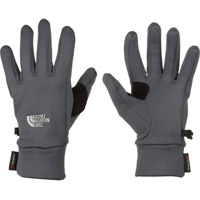 In extremely cold conditions, it's often best to wear
two, or even three, pairs of gloves or mittens, depending
on the weather and your activity level. The layering
principle applies to hands as well: start with a light
base layer, such as
glove
liners, add an insulating layer, and finish with
a weatherproof outer layer if needed. The outer pair
should be windproof, and water resistance is especially
valuable when in or around small boats. In extremely cold conditions, it's often best to wear
two, or even three, pairs of gloves or mittens, depending
on the weather and your activity level. The layering
principle applies to hands as well: start with a light
base layer, such as
glove
liners, add an insulating layer, and finish with
a weatherproof outer layer if needed. The outer pair
should be windproof, and water resistance is especially
valuable when in or around small boats.Ski-style gloves are a solid choice because they provide warmth and water resistance, making them generally sufficient on their own for polar coastal regions in summer, though they offer limited dexterity. Wearing a thin pair of glove liners beneath a warmer outer pair allows you to perform tasks like taking photographs without removing your gloves. In my experience, fingerless gloves or gloves with flaps that let you expose your fingers are largely ineffective, avoid them unless you've tried them before and know they work for you. Mittens are always be warmer than gloves made of the same materials. Sensor gloves: Lightweight gloves that allow you to use touch screen devices without needing to take the glove off. Men's Women's Men's winter gloves and mittens | Women's winter gloves and mittens | Glove liners HEAD
"When your feet are cold, cover your head."
- Inuit saying
Although your hood is windproof, you won't always want it up. A windproof hat can be much more convenient, offering better visibility and greater freedom of movement, while your hood serves as a backup when extra protection is needed. Hats are likely the most varied and personalized piece of cold-weather gear, available in a wide range of fancy colors and designs. However, don't let style take precedence over function, dangly pom-poms, for example, can become very annoying when the wind whips them against your face. Additionally, pom-poms on the top of a hat can prevent your hood from fitting snugly, creating an air gap that reduces insulation. Winter hats - Men's | Women's | Balaclavas | Windstoppers IN-BETWEEN BITS
EYES
Goggles are important in colder weather or during blowing snow, helping to keep snow out of your eyes and providing coverage for the upper part of your face. |



 Sunglasses

Layers of clothing for Antarctica,
underwear and insulating layers on the left
and then alternative
shells to go over these depending on conditions and activity
levels to the right.

Accessories for the extremities are vital,
boots, gloves, head and eyewear for Antarctica
In the coldest
weather, the gloves and boots required become quite cumbersome
so limiting what can be achieved.
When fully equipped for extreme cold, there should be no exposed areas or "cold spots", you shouldn't be able to move and reveal skin or just a single layer at the wrists, neck, or midriff. Your outer layer should always remain the outermost layer; don't rely on an inner jacket or mid-layer to act as the shell, or you'll find yourself uncomfortably cold before you realize it. With goggles, a well-drawn hood, and a balaclava, it's possible to have no exposed skin at all.
Equally important is the ability to adjust your clothing easily. Features like draw-cords and pit zips (armpit zippers on the shell layer) allow for ventilation when opened or added insulation when tightened. Hoods, balaclavas, and hats can be added or removed to match changing weather and activity levels.
Antarctic gear often appears oversized when seen alone. Shirt, jacket, and sweater hems are long, boots are chunky, mittens are extended, and hoods are large. Overpants, in particular, may seem excessive, but they are designed to be worn outdoors in severe conditions, where you can't simply sit down and remove your boots first. Outer layers are meant to quickly go over everything beneath them, then be zipped, drawn, or tied snugly to trap heat close to the body.

An Antarctic
Scenario
- layering for versatility
This is me in Antarctica on a relatively mild, calm late-winter day at around -15°C (5°F). The sun and lack of wind made it feel unusually warm for a short while, though the temperature could drop quickly, especially as the sun set early in the afternoon. This is a real use of cold weather gear in action, in the worst weather it is dangerous to venture far from base, so most people stay put.
We set out on a trip to visit icebergs frozen into the sea ice. The journey involved a rugged three-mile overland hike to reach the sea's edge, followed by a couple of miles across broken, snow-covered sea ice.
It was a day of constantly changing conditions: fluctuating temperatures, variable wind speeds, and differing activity levels, hard uphill walking followed by easier stretches on flat terrain. At any moment, severe Antarctic weather could arrive, so we needed to be prepared. Our clothing had to be versatile enough to handle changing conditions and capable of fending off the worst the weather might bring.