
What Camera and Photographic Gear Should You Take to Antarctica for Cold Conditions?
You'll want to get a personal record of your trip to Antarctica, it may mean upgrading your current camera or adding some new items to what you already have, here are some pointers as to what to consider buying.
Photographs are made more by the photographer, less by the equipment and once you get to a certain level of ability (lower than you might think) spending more has little effect. It's always nice to have high quality, highly featured equipment - though it won't compensate for pointing it in the wrong place at the wrong time.
Don't get obsessed with photographic gear, most of my photographs that I have published on this site (those in the Picture Galleries) were taken using a long obsolete mid-range, completely manual and mechanical 35mm film camera (a Pentax MX) mainly using a standard 50mm lens for scenery and general shots or a 100mm lens for wildlife.
What type of camera should I get?
Modern cameras can be divided into two broad categories, those with interchangeable lenses and those without. Interchangeable lens cameras are further split into DSLR (Digital Single Lens Reflex) and Mirrorless. Those without the facility to change lenses are often called "point and shoot". This is your first decision. Prices can vary widely in both categories as can the quality of images produced. The best images will generally come from interchangeable lens cameras and the cheapest will be point and shoot, though there is overlap.
Interchangeable lenses
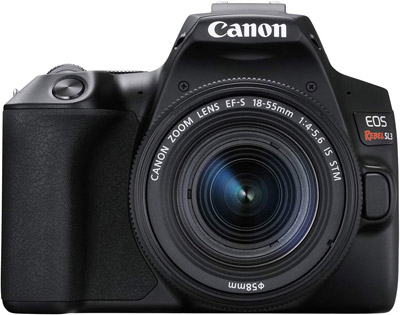
Standard DSLRe.g. Canon EOS Rebel SL3

Sensor size:
22.3 x 14.9 mm - 332.3 mm2
24.1 MP = 7.3 MP/cm2
Camera size:
449g (15.8 oz) body only
122 x 93 x 70 mm
+ extra for lens
buy dslr cameras
Interchangeable lenses
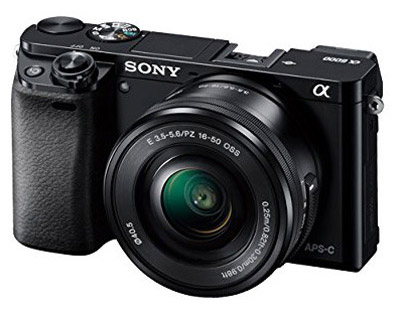
Mirrorlesse.g. Sony Alpha a6000
Sensor size:
23.5 x 15.6 mm - 366.6 mm2
24.3 MP = 6.6 MP/cm2
Camera size:
344g (12.1 oz) body only
120 x 67 x 45 mm
+ extra for lens
buy mirrorless cameras
Fixed zoom lens
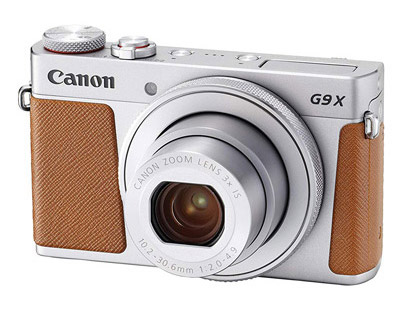
Compact Point & Shoote.g. Canon PowerShot G9X Mk II

Sensor
Sensor size:
13.2 x 8.8 mm - 116.2 mm2
20.1 MP = 17.3 MP/cm2
Camera size:
206g (7.27 oz)
98 x 58 x 31 mm
buy point and shoot cameras
The most immediate difference is in size and convenience, if you don't want to carry extra bulk and are just going to be annoyed by the prospect of changing lenses, then point and shoot is the way to go. If you want the best quality images and the greatest degree of control, then you'll want to be able to change lenses, these cameras also usually have larger light sensors which give better quality images. Mirrorless cameras combine a large sensor with a smaller body size than a DSLR, though this only applies to the body, the lenses they use are often the same size, they also come at something of a price premium compared to a similar DSLR.
Camera size and sensor size
Sensor size counts more than just raw pixels. Ever since digital cameras were first invented, manufacturers have produced new models with ever increasing pixel counts, though not necessarily with a corresponding increase in picture quality, Shouldn't a 10MP camera be twice as good as 5MP? a 25MP five times as good?
Pixel number alone is misleading, it should be considered in conjunction with sensor size as well, as the sensor gets smaller, the pixels are squeezed closer together and quality of image suffers for the same pixel number. A smaller sensor means that the camera itself can be significantly smaller however.
Note the jump in sensor size between the DSLR and Mirrorless models and the point-and-shoot model and the difference in pixel density. This explains why larger cameras deliver better quality results than smaller models with the same number of pixels - Sensors - size matters!
p.s. The sensor in your smartphone is tiny by comparison to the sensors on this page. While smartphone cameras may be pretty impressive for what they are, they aren't near the quality you get from a digital camera with a large sensor.
SLR stands for Single Lens Reflex. It means that you look through the taking lens (it only has one), and so see exactly what the sensor sees. Just before the photograph is taken a small mirror that enables you to see flips up and out of the way so the light falls on the sensor. Mirrorless cameras do not have a mirror to reduce size and weight, view finding is electronic only, via the large sensor and the rear LCD screen, this means they get through batteries at about twice the rate of a DSLR.
DSLR / Mirrorless v Point and Shoot
|
DSLR / Mirrorless Advantages:
Disadvantages:
|
Point and Shoot Advantages:
Disadvantages: |
Do I need a special camera for cold conditions?
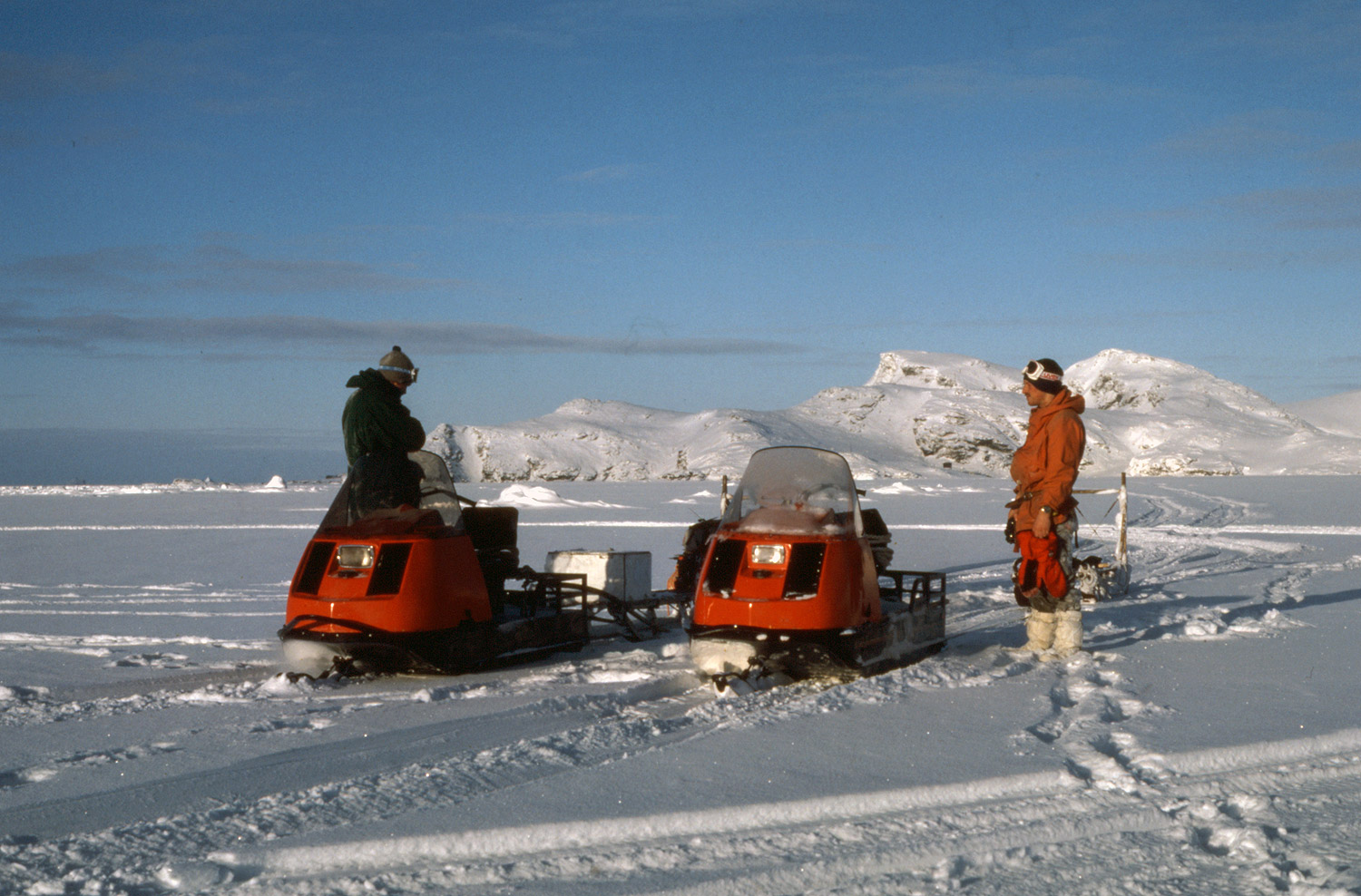
Unless you are going to be working there and overwintering, your trip to Antarctica will be in the summer months when conditions for people and cameras alike aren't so extreme. You can expect the temperature to not fall below -10C (14F) so any modern camera will cope with conditions without requiring any special kind of protection or features. You should treat your camera as you would any electronic device, such as your phone, protected in a bag when possible, bringing it out when you want to use it. A camera will survive fine most of the time round your neck ready for use in conditions where you would be happy to have your phone out, i.e. as long as it doesn't get wet. So don't carry it out when it's raining or snowing and keep it safe when in the zodiacs as splashing sea-water won't do it any good at all.
Returning indoors with cold camera gear - don't take your gear out of the bag or case until it has warmed up. Removing cold gear in a warm room will result in condensation forming on the camera and lens surfaces which could end up on the inside, leave it for an hour or two first.
More on cold weather photography
Lenses
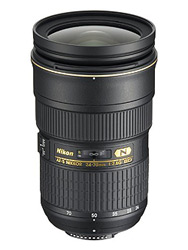 Two
zoom lenses, one of around 20-50mm and one of around 50-200mm
cover a 10x magnification range and will be enough for the great
majority of your photographs.
Two
zoom lenses, one of around 20-50mm and one of around 50-200mm
cover a 10x magnification range and will be enough for the great
majority of your photographs.
A "standard lens" has a focal length of 35mm on most DSLR's, this means that the camera sees as your eye sees with no magnification and no wide-angle effect, anything less than 35mm is wide-angle and any greater is telephoto. (What follows refers to DSLR's rather than digital compacts where focal lengths differ due to the smaller sensor sizes.)
Most dslr and mirrorless cameras come with a "standard" zoom lens, which gives a range of focal lengths from wide angle to short telephoto, 20-55mm ish is typical and makes for a fairly compact lightweight lens to carry around on the camera most of the time.
Beyond the standard zoom lens, the next step is the range from 50-200, along with the standard this will be used for the vast majority of most people's photographs.
Lenses longer than 200mm are essential for much wildlife photography - but not in Antarctica, you can get close enough without them. Likewise wide-angle lenses down to about 20mm are commonplace and affordable, for very wide angles below 20mm prices increase quickly and their uses are more specialized.
Wider zoom ranges are available such as 28-300mm, they give the convenience of changing lens less often and nearly always having the one you want already on the camera, though at the cost of extra bulk and weight to carry around (twice that of the alternatives or more, and you will always be carrying them), they also come at a higher price, though some prefer this solution.
Fixed lenses of a single focal length (also called prime lenses) are lighter in weight than the zoom equivalent, have a larger maximum aperture (they are brighter to look through) and will always be of better quality than a zoom.
Accessories
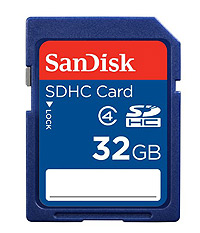
The cost of memory cards continues to fall now being a small amount of the cost of the camera itself, so there's no reason to not have enough memory. If you have a camera with in the region of 20MP, Start with 2 x 32Gb cards for still pictures, if your camera has a video facility, 2 x 64Gb may be a better starting point. As you use your camera more, you'll get an idea of how many you need, as a rule of thumb I try to always have about 50% more memory capacity for a photographic trip/journey than I think I am likely to get through.
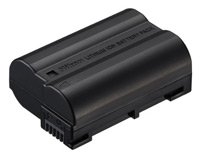
Your camera will probably come with one battery and a charger. The flipside to being able to take almost unlimited pictures is that your camera needs to be constantly fed with power, having a spare battery means that you are able to do this.
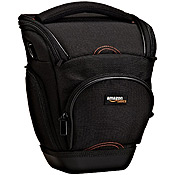
A digital SLR in particular will need it's own case. While it is possible to get a backpack dedicated to camera gear, this will be over the top for most people. My own preference is for a padded case that can be worn around the waist on a belt for quick access without wearing the camera round the neck, more easily accessible than in a back pack and more freedom of movement than a shoulder bag. This case and belt can be put into your backpack along with your other gear for protection and ease of carrying if you know you won't be using it for a while and to protect it when in the boats.
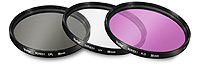
You should always have a skylight filter on every lens you have to protect it from damage, a polarizing filter can be useful too to get some good deep blue skies and contrasting clouds.
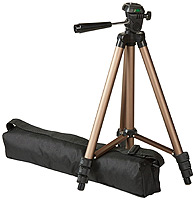
Getting a bit more specialist now. At first sight they may be a pain to carry around, but many of the professional photographs you have ever seen have been taken with the aid of a tripod. I'm not going to suggest you go out to get one and carry it everywhere as even light weight ones can be cumbersome. In particular, you need to take the time to set it up in order to take a picture rather than just grabbing one that is hand held.
On the other hand, when you see the difference to how sharp your pictures are when using a tripod, and no longer have so many slightly blurred ones, you could be a convert.
I often carry a monopod with me, which is slimmer, lighter and much quicker to use, though obviously not as stable, where possible I try to brace it against a rock, tree or similar to attain greater stability.
If you go for one of the more expensive tripods or monopods, make sure you get a head too as they often come separately as I discovered to my cost once up a mountain when I tried to use my shiny new monopod I'd bought and found there was nothing there to attach my camera to.
Recommended Photographic
Equipment
Quality DSLR - Canon and Nikon have a wide range of cameras and lenses, Pentax have almost as many lenses, look out for weather sealing.
Standard lens, a zoom of around 20-50mm - Don't scrimp on this as it will be the one you use most often. Lenses
Telephoto lens a zoom of around 50-200mm - wider and longer zoom ranges are available, but watch the size and weight. Lenses
Protective skylight filter for each lens - leave this on all the time, replace it if it gets scratched or damaged. Filters
Camera bag - If you don't have a bag to take all your gear, make sure you have padded cases for lenses when not in use. Bags
Blower brush and lens tissues
to keep it all clean and dust-free - and use them!
Preferably not when out and about, but at the start or end
of the day in preparation.
Kits