
Gashamna, Hornsund, Whale Bones - 13
Back to gallery | Back to Thumbs | Previous | Next
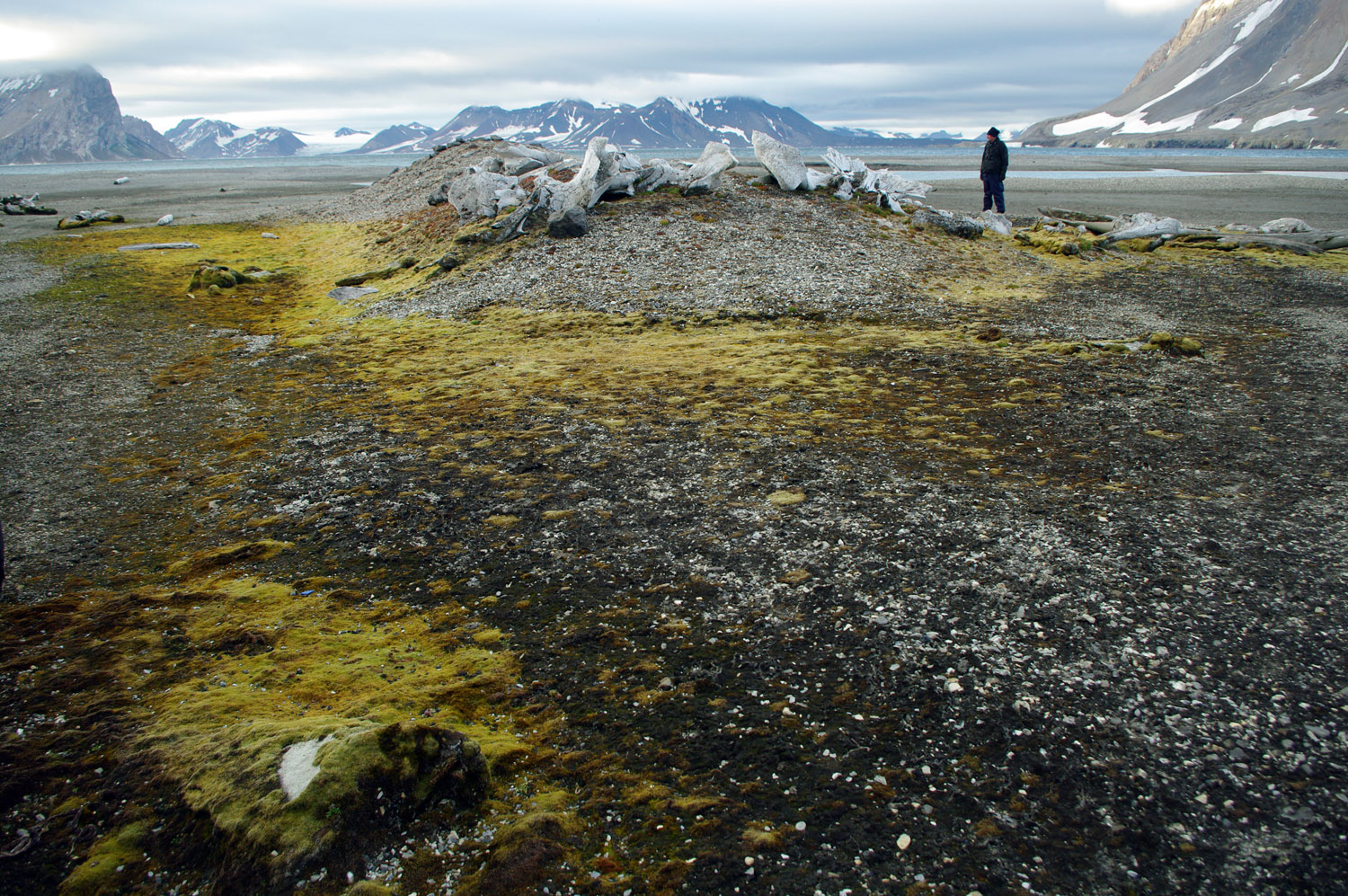
The remains of a bowhead whale skulls. These pieces are resting atop a mound that is all that remains of a "blubber oven" where the oils was rendered from whales, the fires being fuelled by whale skin, bone and any other pieces that were not directly useful. Such large pieces would presumably have been too large to fi into the oven themselves, they seem to have been left around the ovens, possibly adding to the structure with their bulk.
Note the lush growth of mosses. This is a result of the nutrients supplied by the bones as they decayed, the surrounding ground by comparison is bare and sterile. The most amazing thing about this is that over 350 years after being left in this position, the minerals that leached out of the bone are still having a significant localized effect on plant growth. A vivid example of recycling on the small scale.
A large open bay to the south of the Hornsund fjord, Gåshamna is the site of whaling activity from the 1600 to 1700's. In these times bowhead and right whales were the target species as they were slow swimming and relatively easy to catch, they yielded large quantities of oil and of whale bone (baleen). The faster swimming rorquals such as blue, fin and minke whales wouldn't be in the whalers sights for another two hundred years.
These remains are left behind by English whalers of this era.
76° 56.7' N, 15° 49.9' E
Photo; © Paul Ward - These are pictures from a cruise around Svalbard inside the Arctic Circle in high summer.