


Antarctica Travel Guide
Polar Cruises with Cool Antarctica and Antarctica Travels
Information:
Request
Contact |
Antarctic travel
- more details |
fly to Antarctica |
FAQ's |
clothing |
boots
Regions:
Antarctic Peninsula |
South Georgia |
South Shetland Islands |
Falkland Islands |
Arctic
An organized expeditionary cruise allows you to get the most of your visit to the most southern continent where you will be guided by experts who are a mixture of seasoned seafarers and ice or wildlife experts. We can help you work through the many options available to find the best trip for your own personal preferences.


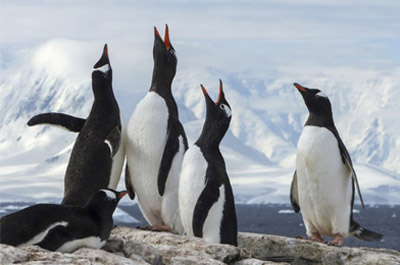
Amongst this icy splendour lives a unique collection of wildlife that is generally not stricken with shyness and is frequently present in enormous numbers.
"You can't protect
what you don't know."
Lars-Eric Lindblad
leader of the first commercial Antarctica cruise in 1966
"We should have the
sense to leave just one place alone"
Sir
Peter Scott Founder of the WWF and son of Robert Falcon
Scott

How long are trips?
Antarctic Peninsula trips, Cruise based - 6 to 23 days from port to port in South America, longer trips take in South Georgia and/or the Falkland Islands. Sail there and back or fly to meet your cruise ship.Ross Sea Region, Eastern Antarctica, Cruise only - Depart from and return usually to New Zealand, sometimes to Australia or sometimes from one to the other. 23 - 35 days. Sailings only, no flights.
Peninsula

Peninsula, Falklands, S. Georgia

Ross Sea Region

All Inclusive:
There are generally very few extras to allow for on Antarctic cruises, the trips are "All Inclusive" in terms of the great majority of needs and requirements, typically trips are from port-to-port.
Usually included in all trips
- Accommodation and all meals on board.
- Snacks, coffee and tea.
- Programme of lectures on the ship and guidance ashore by an expedition team.
- Daily shore excursions, hiking program.
- Transfers from hotel to ship on the day of departure and to the airport at end of the cruise.
- Miscellaneous port fees, landing charges and taxes.
May be included in some trips
- Loan of waterproof boots for landings.
- Complimentary parka or wind/water resistant jacket to keep.
- Some alcoholic and soft drinks.
- Flights from South America to Antarctica and back for fly-cruise trips.
- Photography program.
Usually not included
- Flights to port of departure and back, transfer at port to hotel.
- Laundry.
- Personal communications, phone calls, email, fax, internet use.
- Optional excursions where available , camping, kayaking, snow-shoeing, diving, cross-country skiing, mountaineering.
- Medical and evacuation insurance (compulsory).
When and where do trips take place?

The formation and movement of sea-ice outside of these months means that from March to October, Antarctica is left to the over-wintering scientific bases and their crews.
Tourist ships possibly could get in and out earlier or later in the season, but there is the all too real danger of not being able to get to the places on the itinerary, or more importantly of being stuck in the sea-ice and taking months to get out again, an enforced winter (for up to 8 months or more!) as has happened on scientific stations occasionally. So tourist ships just don't risk it.
In the winter pack ice extends over 620 miles around the continent and there are weeks or months of darkness and temperatures drop as low as -60C.

Temperature Range;
December to February +5C to -6C
Late October to Early December
(Late Spring / Early Summer)
- Courting season for penguins and seabirds - see spectacular courtship rituals.
- Seals visible on fast ice.
- Spring wildflowers in the Falklands and South Georgia.
- Elephant and fur seals establish their breeding territories.
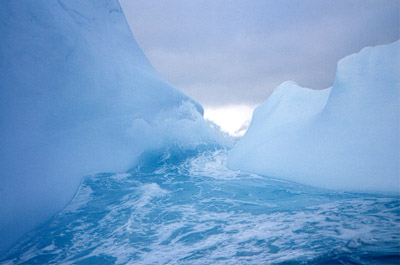
- Winter pack ice is starting to melt and break up. The scenery is white, clean and pristine with pack ice and giant icebergs.
Mid-December to end of January (Mid Summer)
- Normally Antarctica's warmest months.
- Longer days create great light conditions and fabulous photo opportunities at midnight.
- Antarctic penguin chicks hatch.
- South Georgia and the Falklands - first penguin chicks emerge and fur seals are breeding.
- Seal Pups visible on South Georgia and the Falklands.
- Receding ice allows for more exploration.
February and March (Late Summer)
- Whale sightings are at their best on the Peninsula.
- Penguin chicks start to fledge, most Adelie and Gentoo penguin colonies are nearly vacated by late Feb to early March.
- Blooming snow algae prevalent.
- Receding pack ice allows ships to explore further south.
- More fur seals on the Antarctic Peninsula.
Where do trips leave from?

Trips to the Ross region and Eastern Antarctica most commonly leave from New Zealand, and (much) less commonly from Hobart, Australia, These trips may involve two different ports sometimes departing from one and returning to another.
No documentation or visas are required to visit Antarctica other than a passport as these matters are dealt with by your cruise line. Of course if your cruise stops off at other countries en route, visas and documentation may be required for them, you may need them for Argentina, Chile, Australia or New Zealand depending on your passport.
There are options as to where you go and what you want to do on your Antarctic trip as well as seeing the frozen south. Trips that take in the Falkland Islands or South Georgia for instance can add significantly to the experience and some cruises offer more activities with a number of options such as kayaking, camping, snowshoeing, mountaineering etc. Once you have decided to make the journey to get there you can aim to make the most of where you are. You could tie in a visit to other locations in South America for instance on the way there or back.
Ship size and the cruise
There are passenger ships of a variety of sizes that
sail to Antarctica and the choice of ship can make a big difference
to your journey and experiences.
First of all
Antarctic cruises aren't like other more well known cruises
to warmer climates with professional entertainers, though the
larger the ship, the more likely there is to be entertainment
provided.
What you will find are a number of very well
informed and experienced cruise guides working on the ship who
will give lectures on a regular basis about various aspects
of Antarctic history and natural history. These will also often
be around to socialize in the evenings.
There are rules
laid down by the International Association of Antarctic Tour
Operators (IAATO) covering such things as the size of cruise
ship allowed to enter Antarctic waters and covering conduct
at landing sites in Antarctica. This is a voluntary organization
and is well respected, you should always make sure that the
ship / tour company you go to Antarctica with is a member of
IAATO.

Small Ship Advantages
One of the main rules that will impact on your visit is that only 100 passengers at any one time may be landed in any one place in Antarctica. If you are on a small ship of up to 100 passengers, then you get a chance to go ashore every time. If the ship is larger, then there will be less opportunity for landings. Sometimes, trips ashore are time limited so that multiple groups can go, say for an hour or so before going back aboard the ship so the next group can go. Although there are a number of people who go to Antarctica and rarely or never leave the ship - the choice obviously is yours.
How much does it cost?
From about USD $10,000 for a place in a twin cabin (triples or quads may be available for 15-25% less) plus the cost of air fares and other sundry costs to and from your point of embarkation and then up to USD$60,000 and beyond for the most luxurious ships and cabins on longer trips. You can usually have a cabin to yourself on payment of a supplement, though if you are a solo traveller it is more usual to share with someone of the same sex in a cabin at the standard twin or triple prices.
You could put together a trip of your own with other people with the help of a small vessel operator running your own itinerary, cost - negotiable, but not too different to the mid to high range scheduled trips.
$13,000 -$15,000 per passenger for a 10-14 day cruise is a reasonable amount to expect to pay with plenty of choice of vessel and cruise.

Can I fly to Antarctica?
Yes - There are Fly-Cruise trips to Antarctica whereby you can take a flight to Frei Station (Chilean) on King George Island in the South Shetlands group in around two hours from Punta Arenas, Chile. The aircraft used are usually 70 passenger BAE 146-200.You then embark on your ship where you follow the Antarctic part of the cruise for around 8 days along the Antarctic Peninsula before returning to King George Island and flying back to Punta Arenas again.
Advantages of flying
You don't cross the Drake Passage by ship - this can be a very rough crossing (it can also be very smooth) which for some people may prevent them going to Antarctica at all if they get sea sick.
Time saving - two sailings across the Drake Passage saves about 4 days in all meaning that is possible to go to Antarctica without spending so much time getting there and back.
Disadvantages of flying
-
You don't get to cross the Drake Passage by
ship - there is something magical about arriving
in Antarctica by ship where the weather and ice change slowly
over a longer period, spotting albatrosses following the
ship, the first ice-bergs, first penguins, seals and other
seabirds as you approach the continent.
Delays to your trip - While no Antarctic Fly and Cruise departure has been cancelled due to weather conditions, some departures have experienced delays of up to three days. The current estimate is that the chances of delay are in the range of 5-10%. Ships can operate in conditions in Antarctica that leave planes grounded. In particular you will need to have some flexibility in your return journey timings.

You can sail or fly across the Drake Passage from
South America to the Antarctic Peninsula.
1 - Ushuaia,
Argentina, 2 - Punta Arenas, Chile
3 - Falkland Islands, 4
- South Georgia
5 - South Shetland
Islands, 6 - Antarctic Peninsula

Trips from New Zealand and Australia are sail
only, there are no flights.
R - Ross Ice Shelf, 1 - Hobart
- Australia
2 - Invercargill / Port
of Bluff - New Zealand
3 - Macquarie
Island, 4 - Commonwealth Bay
5 - Cape Adare, 6
- McMurdo / Scott bases
Antarctic Peninsula
Cruises - 2026 / 2027
| Trip | Highlights | Prices USD* |
|---|---|---|
|
Classic
Antarctic Peninsula Expedition 6 - 17 days |
South Shetland Islands, Antarctic Peninsula, Penguin Rookeries, Lemaire Channel. | from $5,490 typically $12K-14K |
|
Antarctica Peninsula Basecamp 13 days |
Antarctic Peninsula trip with inclusive activities on offer such as hiking, snowshoeing, kayaking, mountaineering, and camping out under the South Polar skies. | from $11,600 |
|
Crossing the Circle 10 - 34 days typically 12 - 14 |
Sail down the Antarctic Peninsula and cross the Antarctic Circle, South Shetland Islands, Wildlife, Scenery. | from $9,390 |
Air-Cruise, Fly the Drake
Cruises - 2026 / 2027
| Trip | Highlights | Prices USD* |
|---|---|---|
|
Antarctic Peninsula, South Shetland Islands. Fly across the Drake
Passage 6 - 21 days typically 8 |
Fly across the Drake Passage in 2 hours to join your ship, cruise the South Shetland Islands and western Antarctic Peninsula. Spectacular scenery, glaciers, icebergs, penguins, seals and whale sightings. A few sail one way, fly the other trips. Some trips cross the Antarctic Circle. Longer trips take in South Georgia and sail back to Ushuaia. | from $5,995 typically $15K-17K |
Ross Sea Region
Cruises - 2026 / 2027
| Trip | Highlights | Prices USD* |
|---|---|---|
|
Little visited Eastern Antarctica, Ross Ice Shelf. 22 - 35 days |
Remote even for Antarctica, sailing there and back take 5 days each with visits to sub-Antarctic islands on the way. Historic huts in a region central to the continent's exploration. Wildlife, ice shelves, ice bergs and sea-ice. Some trips are circum-navigations from NZ to South America or vice-versa. | from $27,500 |
South Georgia with the Falkland Islands
and / or Antarctic Peninsula
Cruises
- 2026 / 2027
| Trip | Highlights | Prices USD* |
|---|---|---|
| South Georgia, Antarctic
Peninsula and Falkland Islands 17 - 28 days |
Sub-Antarctic South
Georgia has some of the most unique and abundant wildlife on earth including
the world's biggest King Penguin colony, one of the world's largest
concentration of Southern Elephant Seals, and many other penguins,
whales, seabirds and seals all with a background of the Alps dropped
in mid-ocean. Falklands Islands - a British colony in the South Atlantic with wild places and diverse abundant wildlife. The Antarctic Peninsula is Antarctica proper with icebergs, glaciers and wildlife. |
from $10,995 |
| South Georgia and
Falkland Islands 17 - 19 days |
from $10,995 | |
| South Georgia and
Antarctic Peninsula 17 - 28 days |
from $16,811 |
* Prices are per person. the lowest price is usually for triple occupancy in a basic cabin.
Options such as kayaking are usually booked when the cruise is booked, they may be at additional cost and have limited availability - it may be too late once the cruise has started.
Tourism in Antarctica - The Continent in Brief
There are no indigenous people on Antarctica. The population varies from fewer than 1,000 in winter to over 100,000 in summer: 5,000 scientists from 27 of the countries party to the Antarctic Treaty, plus tourists. In the 2022-2023 season estimates are that there were over 100,000 tourists, this was the highest ever level.There are no cities, no towns, no hotels, no railroads, no roads, no resorts, no ports, and none of many other things that are usually associated with tourism.
Antarctica surrounds the South Pole. The nearest landmass is South America, which is over 620 miles from the tip of the Antarctic Peninsula
Surface area: 14 million square miles (36 million square kilometers).
There is no indigenous government, management of the Antarctic is organised through the legal framework of the Antarctic Treaty of 1959. Forty-three nations are now party to this agreement, and seven of those - UK, Norway, Chile, France, Australia, Argentina and New Zealand - have historic claims on parts of the continent as national territory. The 1959 Antarctic Treaty preserves the status quo of the continent by neither recognizing nor rejecting the claims of these countries and by not allowing expansion in any way on the continent.
Antarctica currently has no economic activity apart from offshore fishing and tourism, and these are carried out by other nations (i.e. not the continent of Antarctica)
Tourism in the Antarctic is mainly by ship, smaller cruise vessels carrying 100 to 280 passengers each. The ships are ice strengthened and sail primarily to the Antarctic Peninsula region sometimes also including South Georgia and the Falkland Islands.
 Large passenger vessels are not allowed to make landings
and conduct sightseeing cruises only. These were suspended for
a few years when anti-pollution regulations came into force
in 2009 to avoid potentially disastrous oil spills in the case
of accidents. Since 2011 large ships have been allowed to sail
to Antarctica again as long as they don't use heavier grades
of fuel oil, using lighter grades only. These ships typically
spend 2-4 days in Antarctic waters as a part of a wider cruise.
Large passenger vessels are not allowed to make landings
and conduct sightseeing cruises only. These were suspended for
a few years when anti-pollution regulations came into force
in 2009 to avoid potentially disastrous oil spills in the case
of accidents. Since 2011 large ships have been allowed to sail
to Antarctica again as long as they don't use heavier grades
of fuel oil, using lighter grades only. These ships typically
spend 2-4 days in Antarctic waters as a part of a wider cruise.
A smaller number of cruises take place outside the Peninsula region each season. Voyages are made to the Weddell Sea, Ross Sea region and, on occasion, East Antarctica including islands of the Indian Ocean sector. These expeditions may include visits to emperor penguin colonies, historical huts, the Dry Valleys and other remote areas.
One thing you will constantly hear when reading about a cruise to Antarctica is that the weather and ice, not so much clocks and calendars, set the schedule for a journey. No matter what the reason for your visit, you'll be reliant on the continent's changing moods and weather patterns. You may be able to make a landing as expected at the appropriate time, but don't depend on it if the weather and sea state have other ideas.
 Q. I'm considering
going on an Antarctic cruise, but I'm a bit wary that the
reality won't be like it seems from pictures I've seen
and hearing from people who spent years
there. How realistic is two weeks for instance? I'd be interested
in hearing form any one who has been on an Antarctic cruise
whether it lived up to expectations or not.
Q. I'm considering
going on an Antarctic cruise, but I'm a bit wary that the
reality won't be like it seems from pictures I've seen
and hearing from people who spent years
there. How realistic is two weeks for instance? I'd be interested
in hearing form any one who has been on an Antarctic cruise
whether it lived up to expectations or not.A. if you can afford it - go! It is the experience of a lifetime.
2 weeks is never enough, but is a good introduction to the landscape, scenery and wildlife. I came back about 2 weeks ago and it surpassed all my hopes - none of the books you read, photos you see, prepare you for actually being there in the most spiritual, beautiful landscape in the world. You will no doubt go on a cruise ship - don't choose a big one, or you'll never get ashore - go with a small ship and make sure they are members of the IAATO (Antarctic tour operators association) as this will guarantee your trip does not adversely impact the environment there.
I've just returned from an expedition to the Ross Sea aboard the 'Kapitan Khlebnikov'. Definitely the trip of a lifetime - the scenery, wildlife, historic huts etc are just awesome and we also visited several science stations.
If you can afford it (and it's not cheap), then a voyage on an icebreaker rather than just an ice-strengthened ship is the way to get to the places others can't, and the helicopters do add a whole extra dimension to the possible range of shore landings (plus sight-seeing flights as well).
The Lonely Planet 'Antarctica' guide has good info for trip planning. Finally, take far more camera memory than you think you could possibly need...
Mike - Wales, UK
By Email:
"Our weather was perfect. Cape Horn could have been rounded in a rowboat (which rather now spoils reading adventure stories). The Antarctic Circle and the Midnight Sun were more than exciting. A new appreciation of the continent and the need to protect it environmentally are now part of my being.
I know from reading your site that you are concerned about the tourist industry and Antarctica, and justly so. We were tourists on a ship (Holland American - Amsterdam - 1100 passengers) that simply came to look. Since there were so many people we could not set foot on the continent due to the logistics of getting 100 people at a time on land and off. I was very impressed by the quality of the scientists who lectured to us - an ice pilot, a biologist, a man who had led a polar expedition several years ago, a geologist with 40 years experience in the polar regions.
As soon as we entered the Antarctic waters the tone of the trip changed to one of an expedition - no fancy entertainment, no talk of fun and games but a delighted seriousness of being in a very special place. (the food and comfort however remained probably not one of a serious expedition).
II have printed your What's it like in Antarctica? pages 1 and 2 to put with my photo album. Thanks so much for getting that information into one place. I know it represents many hours of hard work. It is appreciated."
Phyl Weaver - USA
Cold mountain - Thomas Keneally travels on the Kapitan Khlebnikov to return a biscuit.
-
"I first went to Antarctica in 1968, for somewhat under a fortnight. In those
days one could visit the continent only as a member of an
official group, and the American ambassador in Canberra,
Bill Crook, a noble soul who would later give his life to
a ..."
more

More details about visiting Antarctica
Contact me about my trip to Antarctica!
Please complete the form
and an Antarctic Expert will contact you
Departures from late October to late March
Our partner company, Antarctica Travels, passionately help people to reach their ultimate destination.
All enquiries will be answered from our office in Patagonia, Argentina.
Dozens of trips - unique combinations of ship + itinerary
Range of ships - 67 to 264 passenger capacity
$5,490 to $89,393
6 to 35 days
Please note - we cannot help directly to find employment in Antarctica, please do not use this form to request any other information than for Antarctic tourist trips
Picture credits: Map of Antarctica - maps used courtesy of Uwe Dedering under the Creative Commons Attribution-Share Alike 3.0 Unported licence / Cuverville Island used courtesy of mike from New York NY US under the Creative Commons Share Alike 2 licence