
Antarctica Tourism - Human Impacts
Threats to the Environment
The Impact of Visitors - Numbers

In terms of raw numbers, tourists greatly outnumber national programme personnel 106,006 tourists as against 5,000 on research stations in the peak season so far in 2022-2023. The previous peak in 2008 led to a call for tourist numbers to be limited as that figure was up 14% on the year before, other than a fall due to covid, each year since 2016/2017 has exceeded 2008. The trend continues upwards as a newly built generation of modern expedition ships able to withstand Antarctic conditions are brought into service.
Very large ships (500 passengers +) account for about 30% of the visits though they are prohibited from making any landings during their usually short visit of 2 - 4 days out of a longer, wider ranging cruise. These large ships were a great concern as an incident involving an oil or fuel spill from them would be very significant, since 2011 such larger ships have been required to use lighter grade fuel oils when in Antarctica to reduce the impact of potential spills.
National scientific station personnel clock up more total days than their numbers indicate as each person is in Antarctica for at least several months and commonly up to a year or more as against 7-10 days for the majority of tourists, so impacts are difficult to compare directly.
Note - The Antarctic tourist season is in the austral (southern hemisphere) summer from November to March, and spans part of two calendar years, so seasons are referred to in the format e.g. 2022-2023, November 2022 to March 2023 in this case.
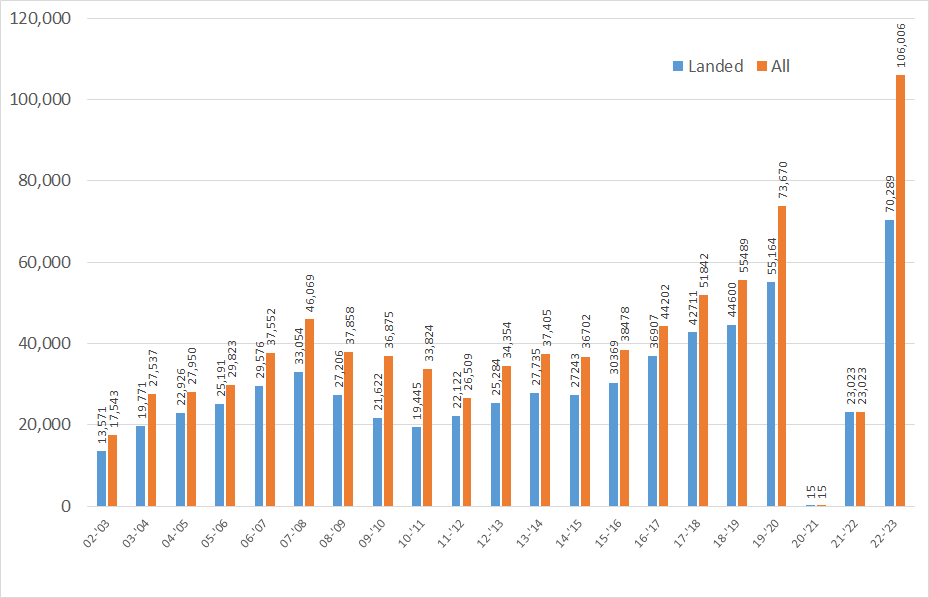
Tourist numbers in Antarctica from 2002 - 2023
Landed - those who set foot on the continent or an island in Antarctica whether they arrived by ship or air, such tourists typically spend 6-30 days in Antarctica, usually less than 10.
All - tourists who went to Antarctica whether or not they set foot ashore.
The difference represents those people who went but didn't land, this group typically cruise for just 3-4 days in Antarctic waters as part of a longer cruise trip and also includes those who overfly in a sight-seeing flight taking just a few hours.
The 19-20 season was cut short a little by covid which also greatly restricted the 20-21 and 21-22 seasons.
To put this into some kind of perspective, in 2022, the following countries received the following number of tourist visitors: Australia - 3.4 million / France - 79.4 million / UK - 31.2 million / USA - 50.9 million / Botswana - 1.7 million.
2022-2023 season: the numbers from the 106,006 tourists to Antarctica in total
who engaged in different
categories of tourism
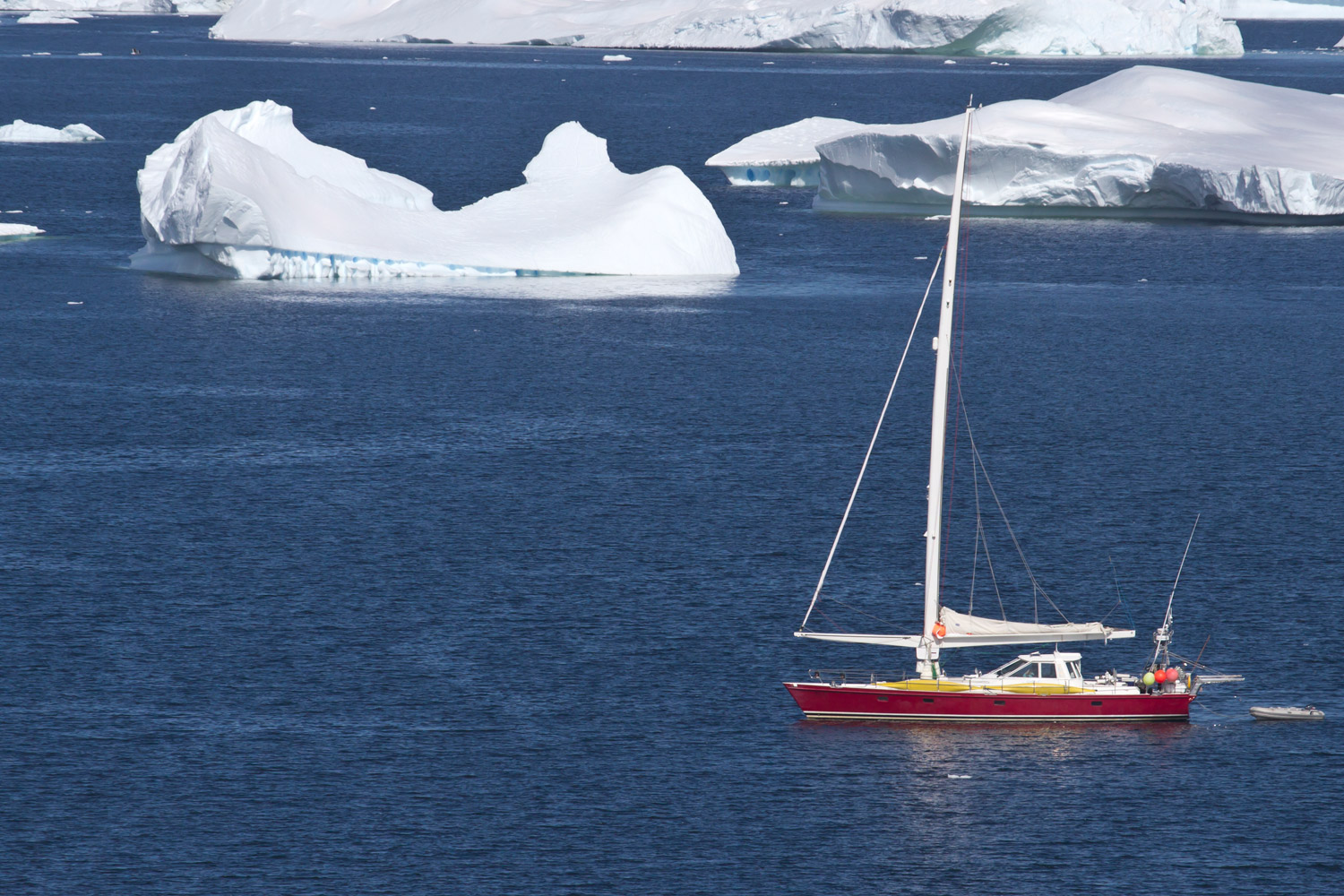
Yachts, up to 12 passengers, landings
136 - 0.13%
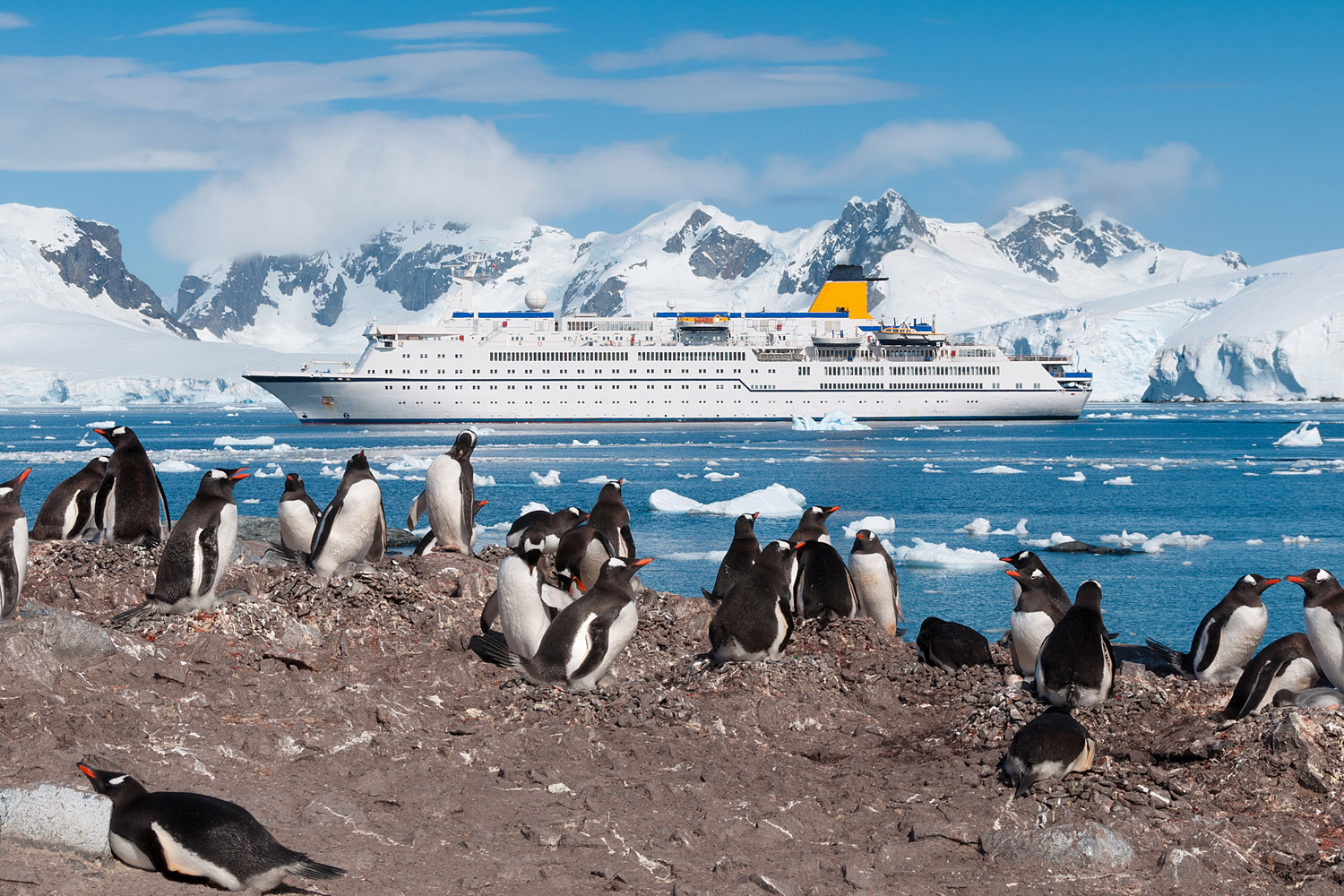
Small-medium ships, 13-500 passengers, landings
69, 368 - 69.4%
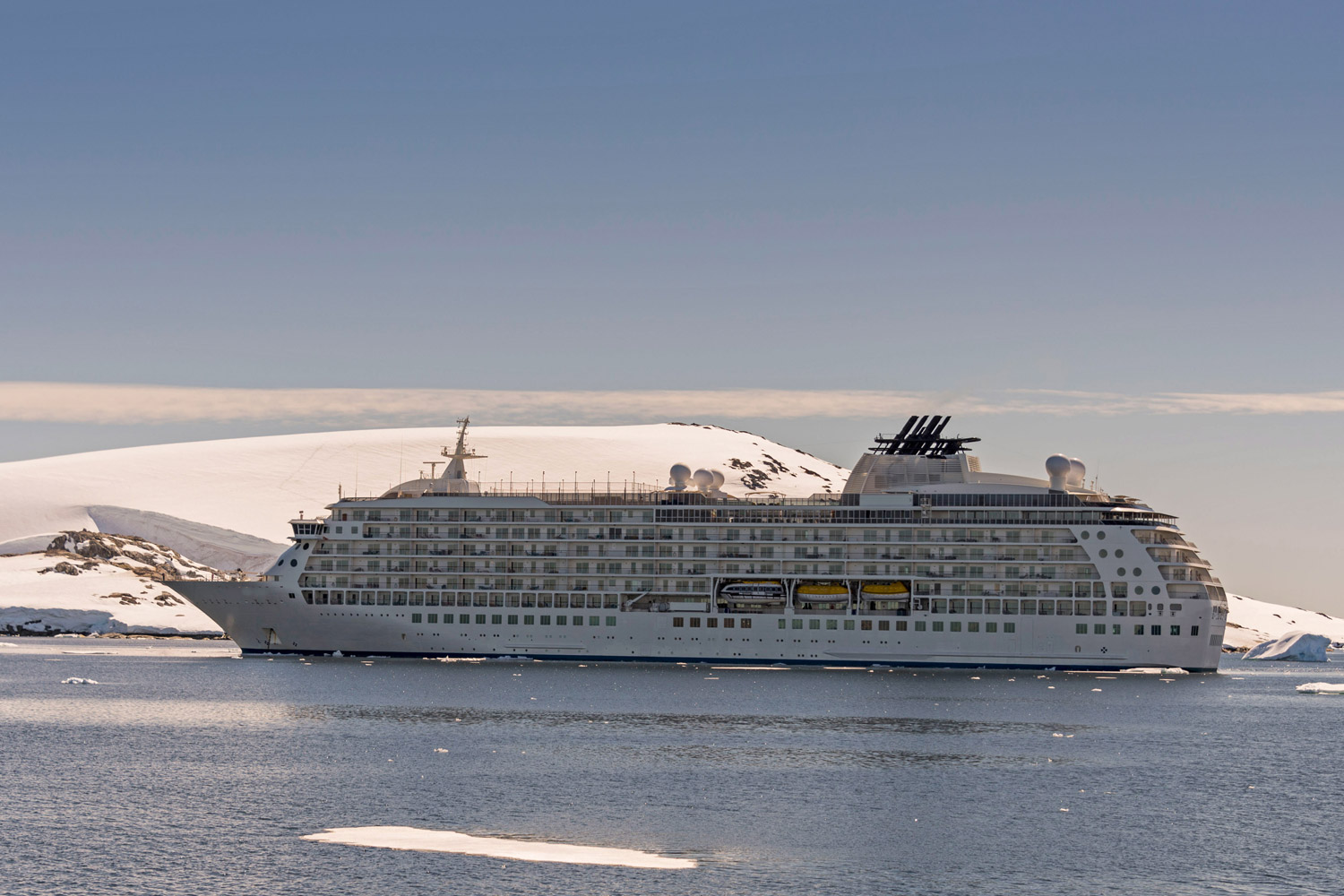
Large ships, 500+ passengers, no landings
35, 717 - 33.7%
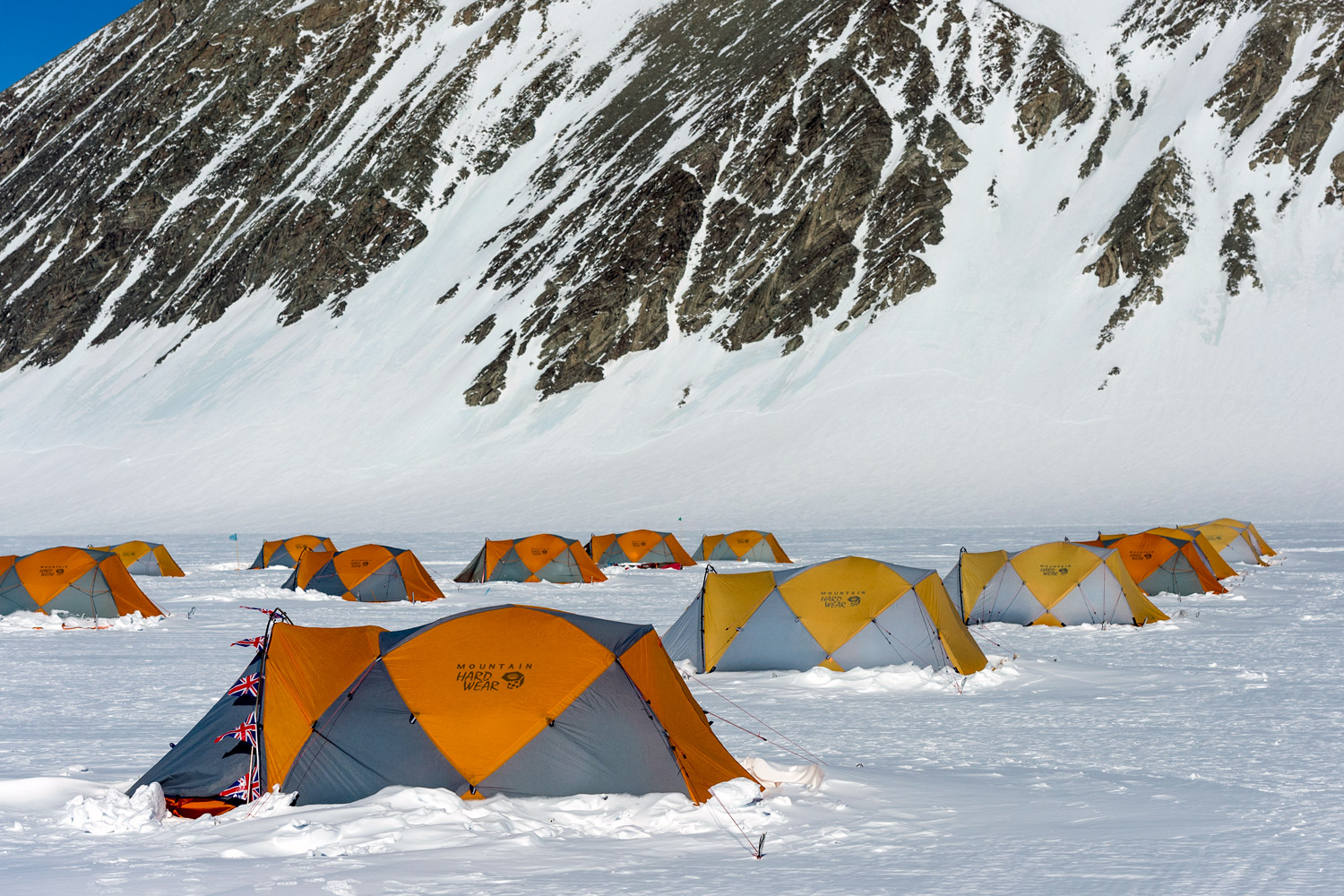
Deep-field land based tourism
785 - 0.74%
While tourists may only only spend a relatively small time on landings, usually just a few hours, it is by its nature relatively high-impact time compared to a scientist or support worker who spend most of their time on a permanently or semi-permanently occupied base. Tourists also by their nature will want to visit the most picturesque and wildlife rich areas of Antarctica.
Areas that are easily accessible by the kind of small boats that take tourists from their ship to shore are relatively rare in Antarctica, so despite its enormous size, tourists become concentrated in a few areas where most landings take place. Even a small tour ship carries far more people than the entire compliment of most Antarctic bases.
One aspect of Antarctic tourism that restricts visitor numbers is the limited tourist season, this limitation is placed by the weather and in particular by the movements of sea ice. The limited tourist season does however coincide with the breeding season for most Antarctic wildlife with the potential for disturbance.
Those national Antarctic research programmes that are supplied by ship (as the majority are) have relatively few visits of those ships, 2-3 over 5 months is typical. In the summer season, the great majority of all shipping activity in Antarctica is of tour ships that go back and forth to South America every 2 weeks or less. There have been accidents with ships being grounded on uncharted rocks and there have been oil-spills. Even with the best safe-guards in the world - and it has to be said that marine regulations for Antarctic ships, both statuary and self-imposed are as good as they get - the more ships there are, the more accidents there will be.
Tourism in Antarctica is at present self-regulated by the International Association of Antarctic Tour Operators (IAATO) founded in 1991 and currently with over 100 members. This is an organization that applies strict guidelines to its member tour operators and ships. Such guidelines limit the size of the ships that can cruise Antarctic waters and also how many people can be landed at sites around Antarctica. So far IAATO is perceived as being successful in its aims and in regulation for Antarctic protection - though there are always those who would have no tourism at all.
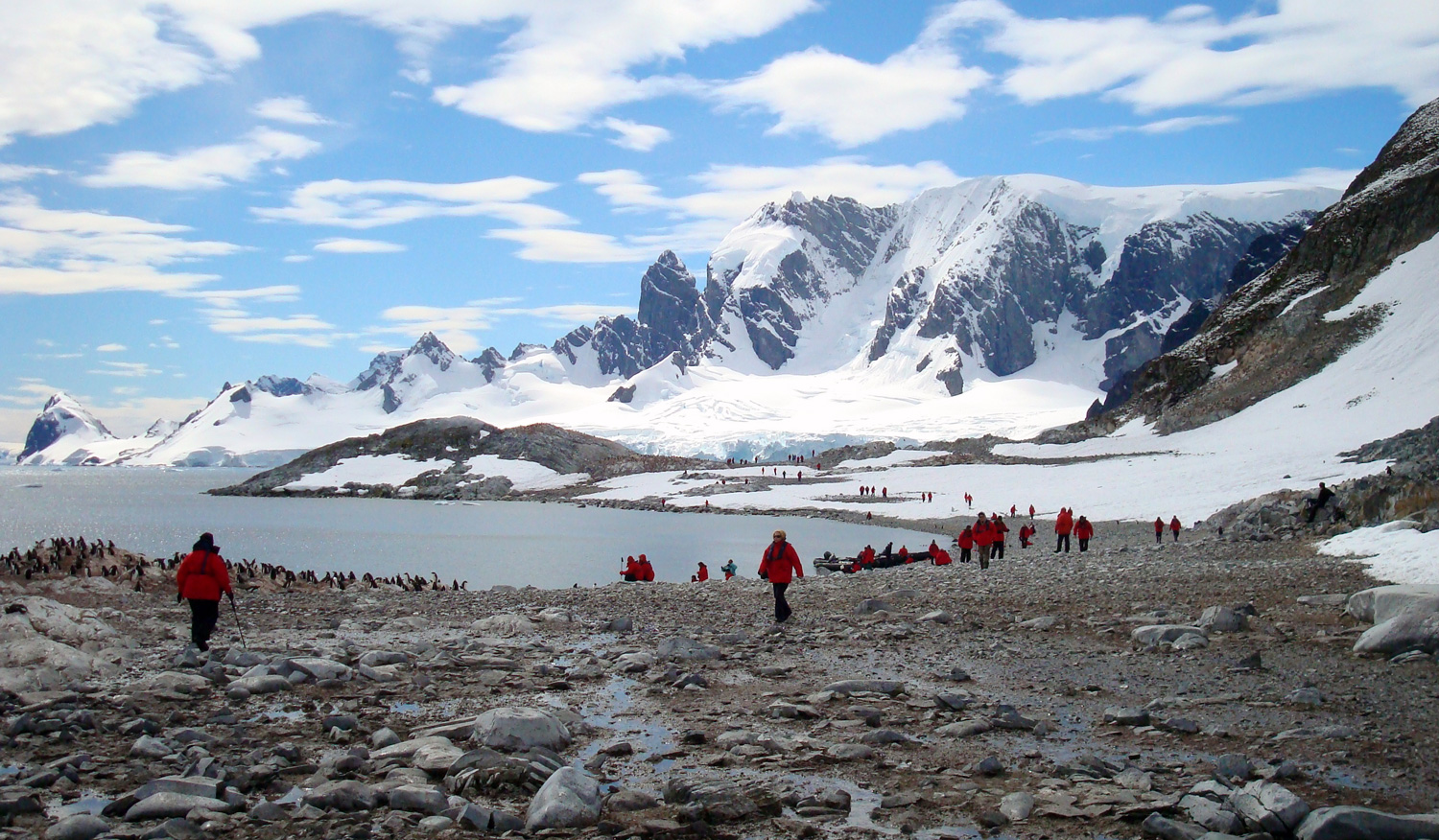
Other threats come from expeditions that are becoming increasingly common of small groups. Antarctica requires careful planning and a series of fail-safe rescue procedures if anyone gets into difficulty. These smaller expeditions sometimes fail to do this adequately and resort to "humanitarian" requests for aid from shipping or nearby national bases when they get into difficulty. Examples come from a small helicopter (totally unsuitable for the task) which crashed into the sea off the Antarctic Peninsula requiring rescue and an attempt to fly across Antarctica via the pole in a small aircraft which ended with the aircraft crashing and the pilot being rescued by nearby base personnel.
There is no guarantee that derelict or crashed vehicles left by private expeditioners will be removed from Antarctica as they should be under the terms of the Antarctic Treaty.
Which countries do Antarctica tourists come from?
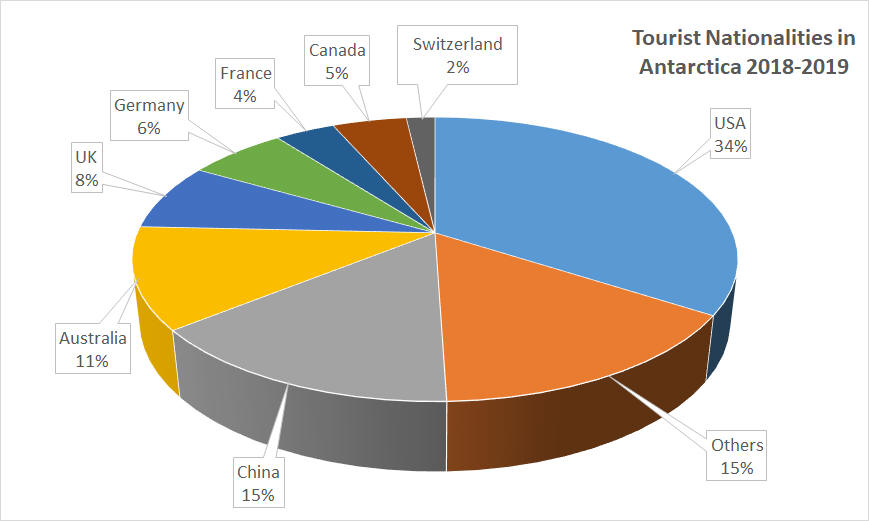
Covid had great impacts on tourism worldwide including which nationalities could travel, this data from the 2018-2019 season is more typical of the proportion of visitors by nationality than more recent years.
| Country of Origin | Percentage |
| United States | 34.1 |
| China | 14.7 |
| Australia | 11.5 |
| Germany | 6.3 |
| United Kingdom | 7.6 |
| France | 3.8 |
| Canada | 4.7 |
| Switzerland | 1.8 |
| Others | 15.4 |
| Totals | 100.0 |
What do tourists do once they are in Antarctica?
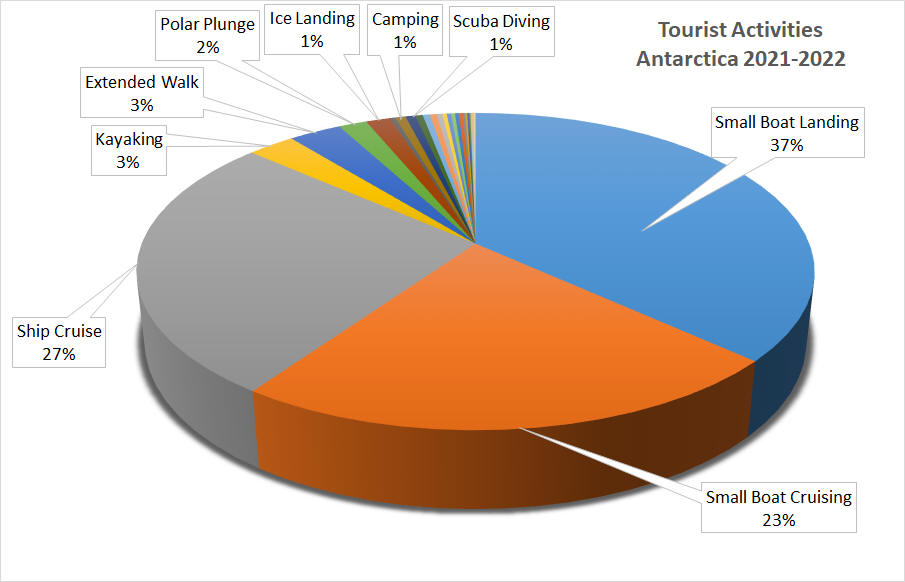
An individual tourist will usually participate in a number of activities when in Antarctica.
|
Antarctica Tourist Activities 2021 - 2022 |
|
| Activity |
Percentage (rounded) |
| Small Boat Landing | 37 |
| Small Boat Cruising | 23 |
| Ship Cruise | 27 |
| Kayaking | 3 |
| Extended Walk | 3 |
| Polar Plunge | 2 |
| Camping | 1 |
| Scuba Diving | 1 |
| Ice Landing | 1 |
| Snowshoeing, Aircraft Landing, Ice Walk, Anchoring, Aircraft Flight, Skiing, Helicopter Landing, Commercial Drone Flight, Citizen Science, Climbing, Snowboarding, Medical Evacuation, Science Support, Marathons, Helicopter Flight, Swimming, Filming, others | Less than 1% each |
| Station Visits - cancelled this season due to covid | usually
2-3% |
| Total | 100 |
The Negative Impacts of Visitors
- Invasive species
- accidentally bringing in insects or seeds on boots, clothes,
in food, cargo etc. These can grow and compete with native
species making life more difficult or starting to dominate
at the expense of the natives.
- Impact on breeding
birds - birds can be made anxious by an
influx of people that may cause them to abandon their nest
or vacate an area all together if regularly disturbed. There
are many records of birds that previously nested around
Antarctic research stations no longer doing so due to the
constant activity around such places. The voluntary code
is that visitors should not go closer than 5m to any wildlife.
- Spreading diseases
- such as bird flu. This doesn't need any direct contact
with birds or other animals, pathogens can be picked up
on boots and then spread to the next landing site which
can be a great distance away, diseases can even be spread
between continents in this way.
- Erosion or disturbance
of fragile environments - many feet walking
over the same piece of ground and routes will leave paths
and other scars.
- Oil spills from ships
and boats - there may be a spill due to
hitting ice and rupturing a holding tank, or if the vessel
sinks, all the polluting fluids will eventually escape.
The Positive Effects of Visitors
- Tourists become ambassadors
for Antarctica - A personal note this, how
or why should anyone care about a place that hardly anyone
knows of or visits? The more voices there are speaking on
behalf of Antarctica if any kind of development or extraction
of mineral resources is considered, the better. This is
a place where no-one lives permanently, so there are no
native residents to speak up for it.
- As travel to Antarctica is expensive, tourists tend to be more affluent and consequently more educated and influential than the average tourist profile. They are more likely to be receptive to the message of conservation, a message which is reinforced by the educational atmosphere on board the ships where the majority of tourism in Antarctica is based.
Larger ships
In 2009 the IMO (International Maritime Organization) approved an amendment to MARPOL (International Convention for the Prevention of Pollution from Ships - MARPOL being short for Marine Pollution) banning the use and carriage of heavy and intermediate fuel oils for all shipping in the Antarctic Treaty Area.This mainly affected large cruise ships that operated "cruise-only" tourism without landings, these ships carry 500+ passengers. As a result of this overall tourism numbers fell from the then peak of 47,225 in 2006-2007, with the difference due mainly to the larger passenger ships leaving the Antarctic market.
Since 2011 these larger ships have been allowed to sail to Antarctica as long as they don't use the heavier grades of fuel oil, using lighter grades only.Accidents
The Mount Erebus Air Crash 1979
On the 28th of November 1979 Flight TE901 left Auckland New Zealand for a sightseeing flight over Antarctica. Such flights had run many times before from Australia and New Zealand (the first such flight was in 1977). The flight was due to take 11 hours with about 4 hours flying over Antarctic sea ice and mountains so the passengers could see it through the windows.
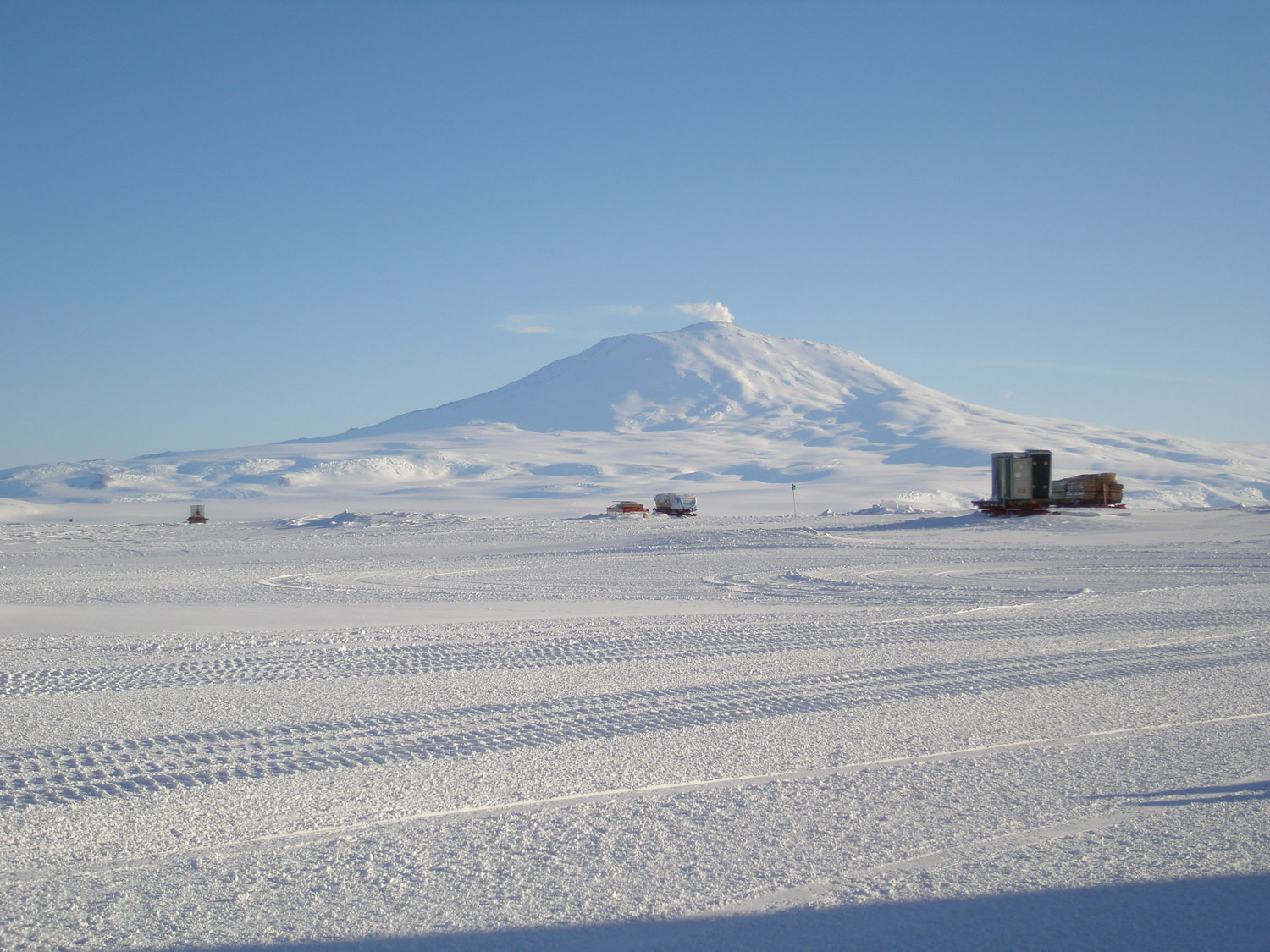 Mount Erebus emitting
a plume of smoke
Mount Erebus emitting
a plume of smoke
Due to a sequence of errors, the aircraft ended up flying in atmospheric near-whiteout conditions where it was difficult or impossible to see clearly what lay ahead and instead of flying low over flat sea-ice as intended, the plane headed towards Mount Erebus (3,794 m - 12,448 ft), and crashed into the lower slopes. There were no warning radio messages sent and it seems that until the final few moments no-one on the aircraft knew that anything was wrong. All 257 passengers and crew were killed instantly.
Similar sightseeing flights were suspended
and not reinstated until 1994, 15 years later when Qantas (Australia)
resumed flights, there have not been any subsequent New Zealand
flights of this nature. The remains of the aircraft are still
on the slopes of Mt. Erebus, the remains of the passengers and
crew were recovered as far as possible and repatriated to New
Zealand.
The story in greater depth from New Zealand History.
Sinking of the M/V Explorer 2007
There have so far been no major pollution incidents or losses of life in Antarctica as a result of ship borne tourism, though there was a very close call on the 23rd of November 2007 with the holing and subsequent sinking by an iceberg of the M/V Explorer in the Bransfield Strait.
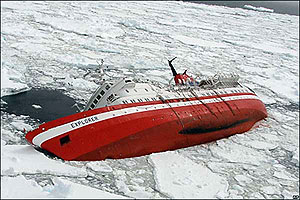
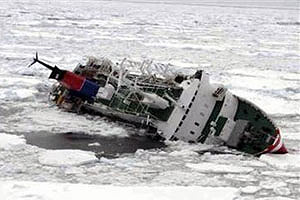
Fortunately for the passengers and crew of the Explorer
the collision occurred in calm conditions, so everyone
was able to get off the ship safely and into lifeboats. It was
especially fortunate as having done so, they found that some
of the boats were inadequate in that they were open and not
even large enough for all on board to sit down and 3 out of
4 of the powered boats engines didn't work. Had it been
in the dark and with a rough sea, the story may have been very
different.
The passengers and crew spent about 4 hours
drifting in the lifeboats before being rescued by other cruise
ships in the area, about 15 hours after this the ship sank in
around 1,500m (4,920 feet) of water. This despite the ship having
a double-reinforced hull to withstand submerged ice.
The ship sank carrying approximately 178m3 of diesel,
24m3 of lube oil and 1,200 L of gasoline. A surface
oil slick 1.5km long and covering 2.5km2 was reported
by the Chilean Navy a few days afterwards which grew to about
5km2 though this represents only a few cubic
meters of oil. Further slicks were seen in the days following
implying there was a slow leak from one or more tanks.
While the lower temperatures in the Antarctic mean that
spills may persist longer than in warmer climates, it seems
that the generally rougher seas help to disperse spills more
quickly. The Explorer was well away from the nearest land, so
the slick was dispersed before it came ashore.
The factors
of a relatively small ship, calm weather and sinking in deep
water well away from land meant that this shipwreck was nowhere
near as damaging as it might have been for the people involved
and also for the environment - these factors however were as
much to do with luck as was the ship hitting a piece of ice
that holed her in the first place.
News summary |
Full investigation report - 97 pages, 5.8Mb
Guardian newspaper article. Explorers or boys messing about? Either way, taxpayer gets rescue bill January 28 2003. Their last expedition ended in farce when the Russians threatened to send in military planes to intercept them as they tried to cross into Siberia via the icebound Bering Strait
Tourist data - Iaato.org