
Food in Antarctica - page 2
Food in the field, pemmican, sledging biscuits and how to avoid scurvy
Food in Antarctica page 1 | Antarctic recipes | Sledging biscuits | Pemmican | Hoosh | Shackleton's bannocks | Food chain | Round the World Race
Pemmican
 Anyone
who is in the slightest acquainted with stories of polar exploration
up to about 1970 will have heard of Pemmican. This
is an early form of a processed food first invented by Native
North Americans and brought to the attention of Europeans by
the Hudson Bay Company. It was planned to be very compact, very
nutritious and to remain edible for a long time.
Anyone
who is in the slightest acquainted with stories of polar exploration
up to about 1970 will have heard of Pemmican. This
is an early form of a processed food first invented by Native
North Americans and brought to the attention of Europeans by
the Hudson Bay Company. It was planned to be very compact, very
nutritious and to remain edible for a long time.
There are many recipes for Pemmican, but basically it consists of a mixture of pounded dried beef with beef fat - other meats or mixtures of meats may be substituted for beef. Explorers of the heroic age of Antarctic exploration would take great care in where they bought their pemmican from and the recipe that it was made to. Pemmican would provide nearly half of the total calories eaten out in "the field".
Pemmican was basic nutritious food that also had the added advantage of remaining edible for years though it is not especially appetizing. It was often made up into a thick meat soup known as "Hoosh" when simmered with melted snow, this was eaten with sledging biscuits, either crumbled up in the hoosh or eaten separately and laden with butter.
In recent years pemmican has gained something of a resurgence as it is prepared and eaten as a snack-food by body-builders and those on low carbohydrate, high protein diets. There are recipes on the net for all kinds of meat ingredients, kangaroo seems popular in Australia. The best I tasted was made of reindeer from the herd that used to be naturalized on South Georgia (released by whalers and sealers) - it was about 8 years old at the time I ate it. It was ok but as a savoury snack I prefer pork scratchings.
Sledging Biscuits
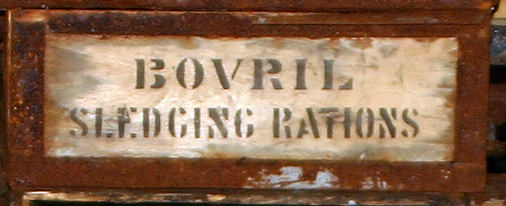 Along
with Pemmican, sledging biscuits are a part of polar lore.
They are approximately 2" x 3" (5 x 7.5 cm) and fairly
thick for biscuits. They are hard and rather like the boring
plain ones you get left with in a mixed box of "biscuits
for cheese" at Christmas.
Along
with Pemmican, sledging biscuits are a part of polar lore.
They are approximately 2" x 3" (5 x 7.5 cm) and fairly
thick for biscuits. They are hard and rather like the boring
plain ones you get left with in a mixed box of "biscuits
for cheese" at Christmas.
Along with pemmican sledging biscuits were - and still are
- one of the mainstays of food for Antarctic field parties.
So much so in fact that sledging biscuits from Scott's 1912
polar expedition and Shackleton's voyage to South Georgia
on the James Caird have even come up at auction with price tags
of many $1,000's. Ordinary ones are cheaper however.
Make your
own sledging biscuits |
Make your
own pemmican
Scurvy
Scurvy is a deficiency disease caused by lack of vitamin C (ascorbic acid). It was a common complaint on sailing ships before about 1900. Humans are one of the few animals (along with bats, monkeys and guinea pigs) that are unable to make vitamin C from other components of the diet. We have to consume it ready made in our food.
The body stores enough vitamin C for about three months. It is found in a whole range of foods, but especially fresh fruits and vegetables. Now as you have already learnt, fresh fruits and vegetables are not common in Antarctica even today. So for early explorers in particular, scurvy was a very real problem. Polar exploration (amongst other exploits) resulted in scurvy as much as anything because it had been relatively rare since 1803 when the British Royal Navy introduced citrus fruits, lemons and limes to combat it. By the end of that century it was such a distant problem that those who suffered from it did not recognise the early stages that their grandfathers would have spotted straight away.
Those going to the Arctic generally had an easier time of it as game (edible wild animals) are generally more common than in the Antarctic where it is almost non-existent in the winter. Where explorers could eat raw fresh meat they could usually escape the effects of scurvy. Even though meat contains relatively little vitamin C it does contain enough. Another factor contributing to scurvy is that vitamin C in stored food breaks down over time and is also broken down by cooking. Some expeditions had considerable quantities of lemon juice (fresh lemon juice is a good source of the vitamin - not the best though) but still the members fell ill with scurvy as the vitamin C in the juice deteriorated until it was no longer effective.
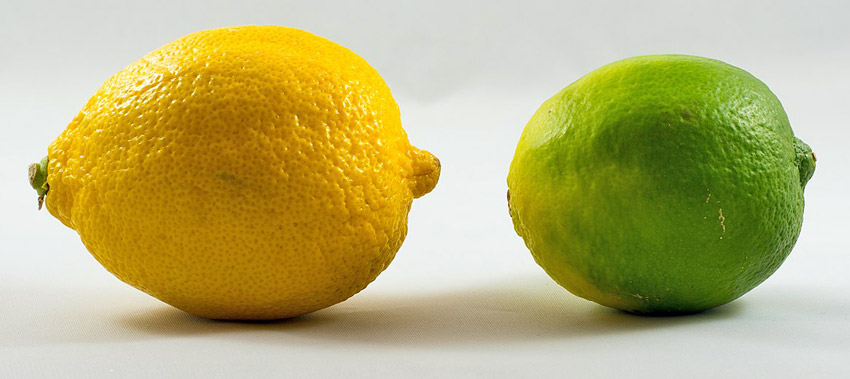 A
lemon and a lime, antiscorbutics - foods or drugs that have
the effect of combatting scurvy
A
lemon and a lime, antiscorbutics - foods or drugs that have
the effect of combatting scurvy
Symptoms of scurvy: Insufficient vitamin C affects the body's production of collagen - a protein in connective tissue that surrounds body structures and holds them together. When someone has scurvy, collagen is still produced, but it is unstable and causes small blood vessels to become weak and wounds in particular to be poorly held together.
Hemorrhages can occur any where in the body, but are most obvious in the skin where they cause widespread bruising. Bleeding from the gums and loosening of teeth is common. Bleeding into muscles and joints also occurs causing pain, tiredness and disorientation. If no vitamin C is available then eventually death is caused usually by bleeding into and around the brain.
A particularly gruesome symptom of scurvy is that old wounds re-open. Wounds are kept closed by scar tissue with a high proportion of collagen, this collagen is continually replaced in the healthy body. With scurvy, the replacement collagen is defective and so wounds from decades beforehand can re-open and bleed once again. Life at sea was a rough and dangerous existence so the men most likely to get scurvy were also those who would most quickly suffer the most from it by old wounds re-opening. On one Arctic expedition in 1875 an Admiralty surgeon specified that no sailors with "old wounds" would be accepted.
In particularly unfortunate individuals;
"Scurvy can reduce the body to a bloated yellow carcass daubed with purple, red and green blotches caused by previous bouts of bleeding of differing ages. The skin itches viciously and where scratched can erupt into suppurating ulcers. The flesh literally falls away reeking of putrefaction."
The cure for scurvy is simply to administer large doses of vitamin C, noticeable improvement occurs within 24 hours.
Scurvy tales
- Ernest Shackleton suffered from scurvy on Scott's
Discovery Expedition in 1901 - 1904 and had to be sent home
sick on a relief ship that arrived. Several other
members of the ship's crew and expedition also showed
symptoms. The reason was that lime juice was taken as a
source of vitamin C, and it's not really that good.
Lemons have about twice as much, but one of the best things
of all are blackcurrants with four times as much, they also
grow really well in Britain whereas lemons and limes don't
- but their high vitamin C content wasn't known at the
time.
- Some expeditions, took supplies of cress seed
or bean seeds with them. If any of the men looked
like they were coming down with scurvy, the seeds would
be sprouted and fed to the ill man. As the seeds grew, they
made vitamin C and so worked to make it on demand. Unfortunately,
this was not widely known or practiced.
- On the expedition on board the Belgica from 1897-1898,
the leader and ship's captain both became ill with scurvy.
Roald Amundsen (later to be the first to reach the South
Pole) and Frederick Cook (later to claim to be the first
to reach the North Pole), rallied the crew and forced
them to eat a diet of raw seal meat to overcome
scurvy. It worked and no-one else fell ill because of it.
- Lemons, and oranges (and later on, limes) were discovered to be a cure for scurvy in 1747 when James Lind a Royal naval surgeon on board HMS Salisbury gave different cures to six pairs of scurvy victims. One lucky pair had two oranges and a lemon in addition to their normal food and were soon strong enough to help nurse the others. Foods that contain vitamin C and can fight off scurvy are called "scorbutic", the word scurvy comes from the earlier "scorby".
1. Dehydrate strips of raw red meat on a very low heat in the oven. About 2-6lbs for a batch. Ask the butcher to slice it for you as thinly as possible. It should be completely dry but not cooked. If it cooks, it will taste gritty when finished.
2. Grind the dehydrated strips up. The Indians pounded them with rocks, but a food processor is probably more acceptable in the modern kitchen. Spices or berries can be added at this time.
3. Prepare the tallow (for binding it all together) by rendering animal fat. Melt strips of beef fat (possibly free from the butchers - ("you want to do what with it?!!") in a frying pan on a low heat until the rinds float to the surface (throw them away - maybe in the direction of the dog or bird table). Carry on heating the resulting tallow until all moisture is removed. It is very important to remove all water from the fat to prevent it going rancid (yuck). Proper tallow can be made from beef fat (suet is best) or lamb fat but not from pork fat as this won't set hard enough when cool. Tallow when cold looks like candle wax in colour and consistency.
4. When the resulting tallow is cold enough to touch but still liquid, add it slowly to the meat powder mixing thoroughly, until all of it is just saturated. This is about a 60:40 meat:tallow ratio by weight.
5. Mould the finished product into tins or whatever - manly bone shapes or gingerbread men moulds etc. When it hardens you've finished. Store in a dry place.
Picture credits: Lemon and lime courtesy of Rhododendrites under CC BY-SA 4.0 licence